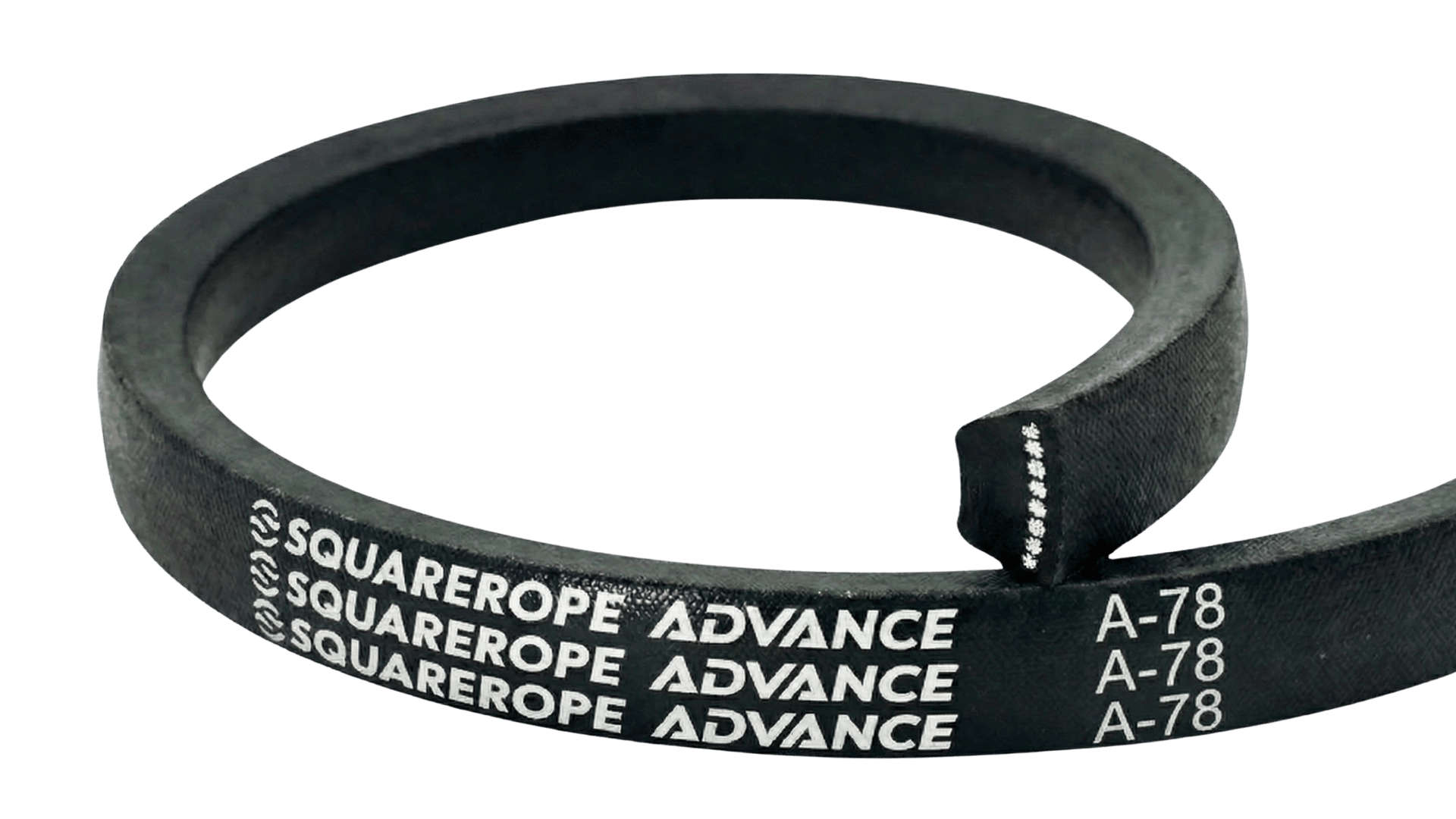
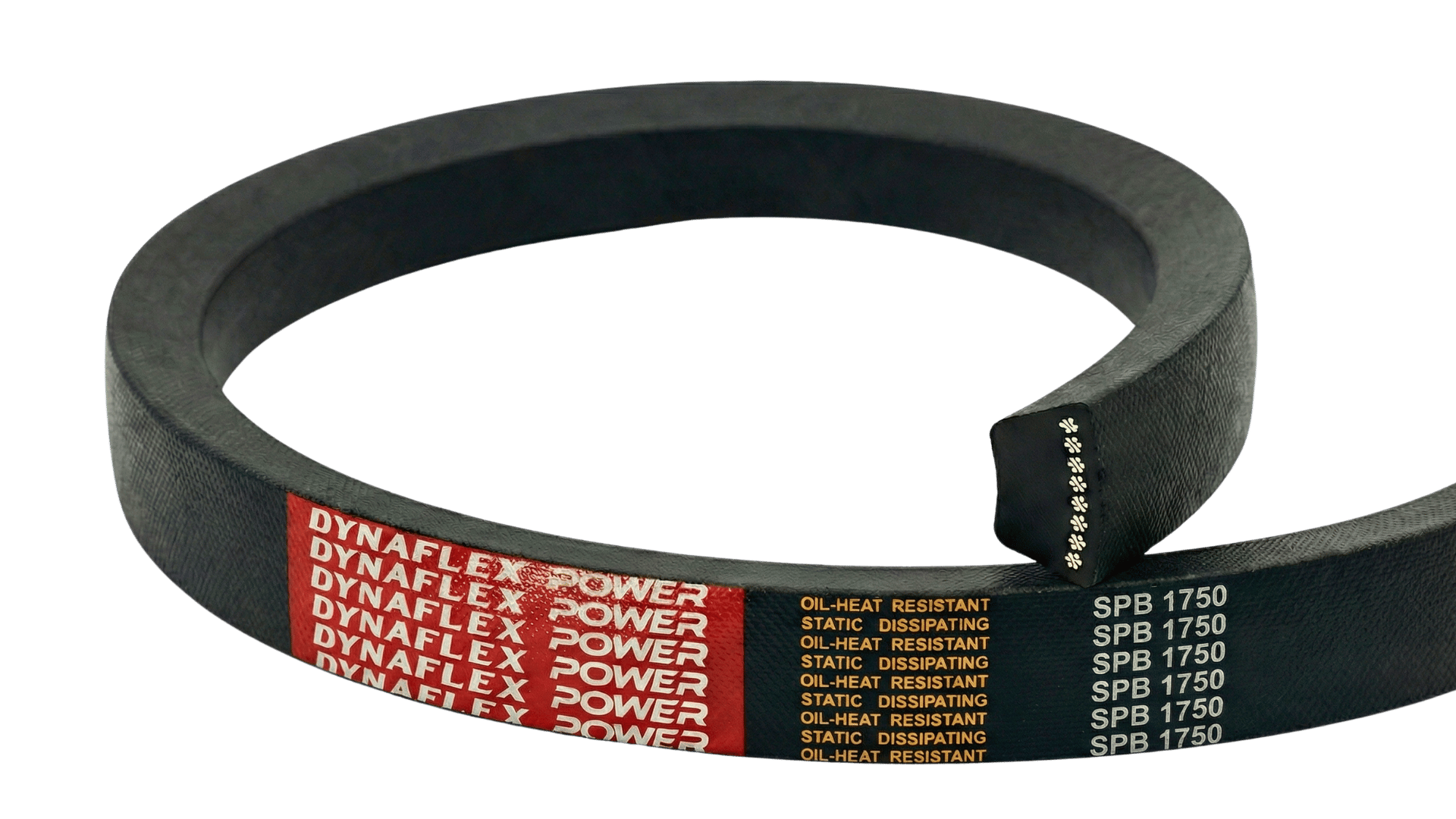
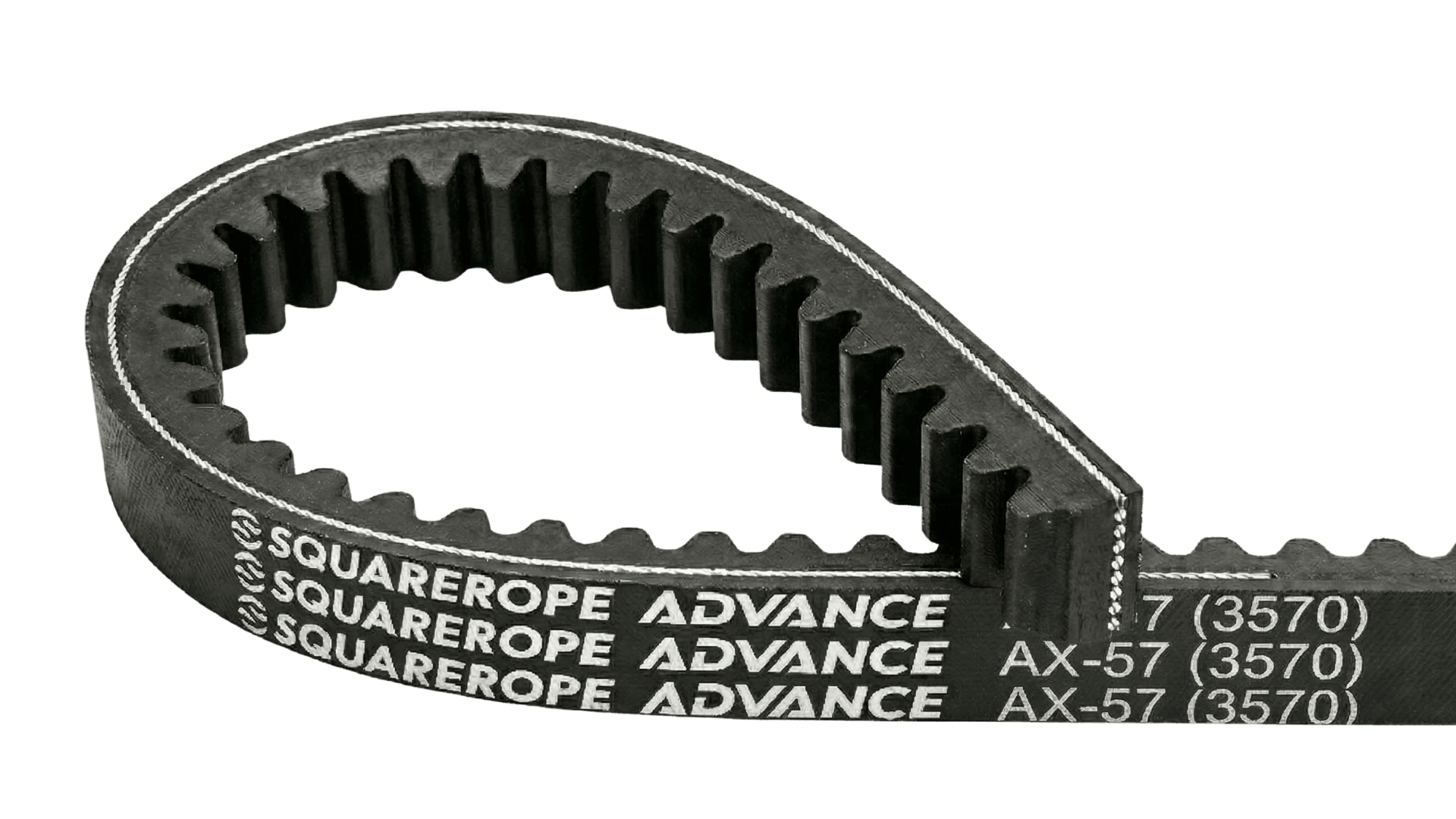
A worn marking or an unlabeled spare does not have to become a guess. Preserve every surviving clue, identify the construction and likely profile family, take reproducible measurements, establish the applicable length system, and verify the result against the selected supplier and standard data.
Start with Evidence, Not Assumptions
Start by separating what you can observe from what still needs confirmation. A marking, photograph, measured cross-section, and pulley-groove record can narrow the candidates, but none of them is a universal part-number decoder.
Evidence to Capture Before Cleaning
Preserve product-specific clues before handling removes them.
| Evidence | Record | How to use it | Limit |
|---|---|---|---|
| Marking | Photo plus exact transcription | Preserve letters, numbers, separators, and brand | A clue, not universal proof |
| Installation context | Machine, pulley, strand count, and position | Keeps the candidate tied to the drive | Does not establish belt rating |
| Condition | Wear, damage, contamination, and distortion | Explains why measurements may differ | A used belt is not a nominal gauge |
- Record
- Photo plus exact transcription
- How to use it
- Preserve letters, numbers, separators, and brand
- Limit
- A clue, not universal proof
- Record
- Machine, pulley, strand count, and position
- How to use it
- Keeps the candidate tied to the drive
- Limit
- Does not establish belt rating
- Record
- Wear, damage, contamination, and distortion
- How to use it
- Explains why measurements may differ
- Limit
- A used belt is not a nominal gauge
Source: SQUAREROPE Technical Team — original field-identification workflow
Next, identify the observable construction and profile family. Keep wrapped, raw-edge or notched, joined or banded, and double-V observations separate from any manufacturer-specific code meaning.
Construction and Profile-Family Record
Describe visible features first; decode a product code only in its applicable source.
| Observation | Record | How it narrows the candidate | Do not infer |
|---|---|---|---|
| Cover and sidewalls | Wrapped or exposed/raw edge | Separates broad construction families | A universal letter code |
| Inner surface | Plain or transversely notched | Adds a construction clue | A performance rating |
| Belt form | Single, joined/banded, or double-V | Identifies the physical family | Interchangeability |
| Cross-section | Likely classical, narrow, or another family | Directs the correct data source | Equivalence from appearance |
- Record
- Wrapped or exposed/raw edge
- How it narrows the candidate
- Separates broad construction families
- Do not infer
- A universal letter code
- Record
- Plain or transversely notched
- How it narrows the candidate
- Adds a construction clue
- Do not infer
- A performance rating
- Record
- Single, joined/banded, or double-V
- How it narrows the candidate
- Identifies the physical family
- Do not infer
- Interchangeability
- Record
- Likely classical, narrow, or another family
- How it narrows the candidate
- Directs the correct data source
- Do not infer
- Equivalence from appearance
Source: SQUAREROPE Technical Team — original field-identification workflow
Do not substitute by appearance or width alone
A similar-looking belt is not automatically interchangeable. Confirm the complete profile and pulley groove, length basis and tolerance, construction, and application or rating requirements in the applicable supplier and standard data.
Identify the Belt in Seven Steps
Use a caliper and flexible tape to create a field record, not a nominal specification. Measure an undamaged section, note the tool and units, and keep every observed value tied to how it was measured.
- Preserve the marking. Photograph and transcribe every surviving character, separator, logo, and construction mark before cleaning.
- Record the drive context. Note the machine, pulley arrangement, number of belts or joined strands, and where the belt was installed.
- Identify the construction and likely profile family. Record visible cover, sidewall, notch, joined, or double-V features without assuming a universal code.
- Measure top width and belt height. Use an undamaged section and record the tool, location, value, and unit; treat worn dimensions as clues.
- Measure outside circumference. Record the result explicitly as an outside measurement and do not convert it generically to another length basis.
- Determine the applicable length basis and drive fit. Identify the family-specific system, then compare the complete profile, pulley groove, and application requirements.
- Verify the replacement. Use the exact selected supplier and applicable standard data, and stop if the marking, measurements, length basis, pulley, or application evidence conflicts.
Separate the Measurement from the Length Basis
Inside, outside, datum, pitch, and effective length are not interchangeable labels. Datum-width and effective-width description systems are independent; use a length value only after the applicable belt family, standard, and supplier definition is known.
Measurement Record
| Measurement | Method | Record | Limit |
|---|---|---|---|
| Top width | Across the widest top face | Value, unit, tool, and location | Not nominal size by itself |
| Belt height | Perpendicular top-to-inner-surface distance | Value, unit, tool, and location | Wear can alter the result |
| Outside circumference | Around the outside surface without twisting | Value, unit, and outside basis | No generic conversion |
- Method
- Across the widest top face
- Record
- Value, unit, tool, and location
- Limit
- Not nominal size by itself
- Method
- Perpendicular top-to-inner-surface distance
- Record
- Value, unit, tool, and location
- Limit
- Wear can alter the result
- Method
- Around the outside surface without twisting
- Record
- Value, unit, and outside basis
- Limit
- No generic conversion
Source: SQUAREROPE Technical Team — workflow informed by ISO 1081:2013 and ISO 4184:2025
Verify the Complete Candidate
A complete candidate is a set of compatible facts, not a decoded number alone. Compare each candidate against the exact data source that governs that belt family and drive.
Final Candidate Verification
| Check | Compare | Required evidence | Stop if |
|---|---|---|---|
| Profile and groove | Full cross-section and pulley-groove data | Applicable supplier and standard data | Only width looks similar |
| Length | Basis, nominal value, and tolerance | Exact family definition | The basis is unknown |
| Construction | Cover, notches, joined form, and product family | Selected product data | A code meaning is assumed |
| Application | Pulley condition, arrangement, duty, and rating | Drive and supplier requirements | Any requirement conflicts |
- Compare
- Full cross-section and pulley-groove data
- Required evidence
- Applicable supplier and standard data
- Stop if
- Only width looks similar
- Compare
- Basis, nominal value, and tolerance
- Required evidence
- Exact family definition
- Stop if
- The basis is unknown
- Compare
- Cover, notches, joined form, and product family
- Required evidence
- Selected product data
- Stop if
- A code meaning is assumed
- Compare
- Pulley condition, arrangement, duty, and rating
- Required evidence
- Drive and supplier requirements
- Stop if
- Any requirement conflicts
Source: SQUAREROPE Technical Team — workflow informed by ISO 4183:2026
Treat Construction Codes as Family-Specific
Construction marks and part-number syntax vary by manufacturer and belt family. Record a letter or separator exactly, but decode it only in the current data for the selected product family.
Observable construction still matters: wrapped or raw-edge sidewalls, transverse notches, joined strands, and double-V geometry can direct the search to the correct family without claiming a universal code.
Check the Belt, Pulley, and Application Together
Compare the complete candidate with the pulley and application. A belt that bottoms in the groove, rides at the wrong position, or disagrees with the specified groove data is not confirmed.
If the evidence conflicts, stop and inspect the pulley, confirm the drive record, or ask the supplier for the exact product data. Do not resolve disagreement by choosing the nearest width or length.
Field Record Before Ordering
Keep this record before ordering a replacement:
- Photograph and exact transcription of surviving markings.
- Machine, pulley arrangement, belt position, and strand count.
- Observable construction and likely profile family.
- Top width and belt height with tool, location, value, and unit.
- Outside circumference explicitly recorded on the outside basis.
- Applicable length system and definition confirmed.
- Pulley groove, condition, and application requirements checked.
- Exact supplier or standard data used for final verification.
- Any unresolved conflict or uncertainty recorded before ordering.
Stop When the Evidence Does Not Agree
For a multiple-belt or joined-belt drive, record the full arrangement and use the selected product family’s set policy. Do not generalize a matched-set or manufacturing-lot rule across manufacturers.
Reliable identification comes from agreement among the marking, construction, measurements, length basis, pulley, and application. If one item disagrees, the belt is not yet confirmed.
Key Takeaway
How do you identify a replacement V-belt?
Preserve the marking, identify the construction and likely profile family, measure top width, height, and outside circumference, determine the applicable length basis, then verify the complete belt, pulley, and application against current supplier and standard data.
Need help matching the correct belt? Review our V-Belt and SP Power Belt product pages, or contact SQUAREROPE for application support.