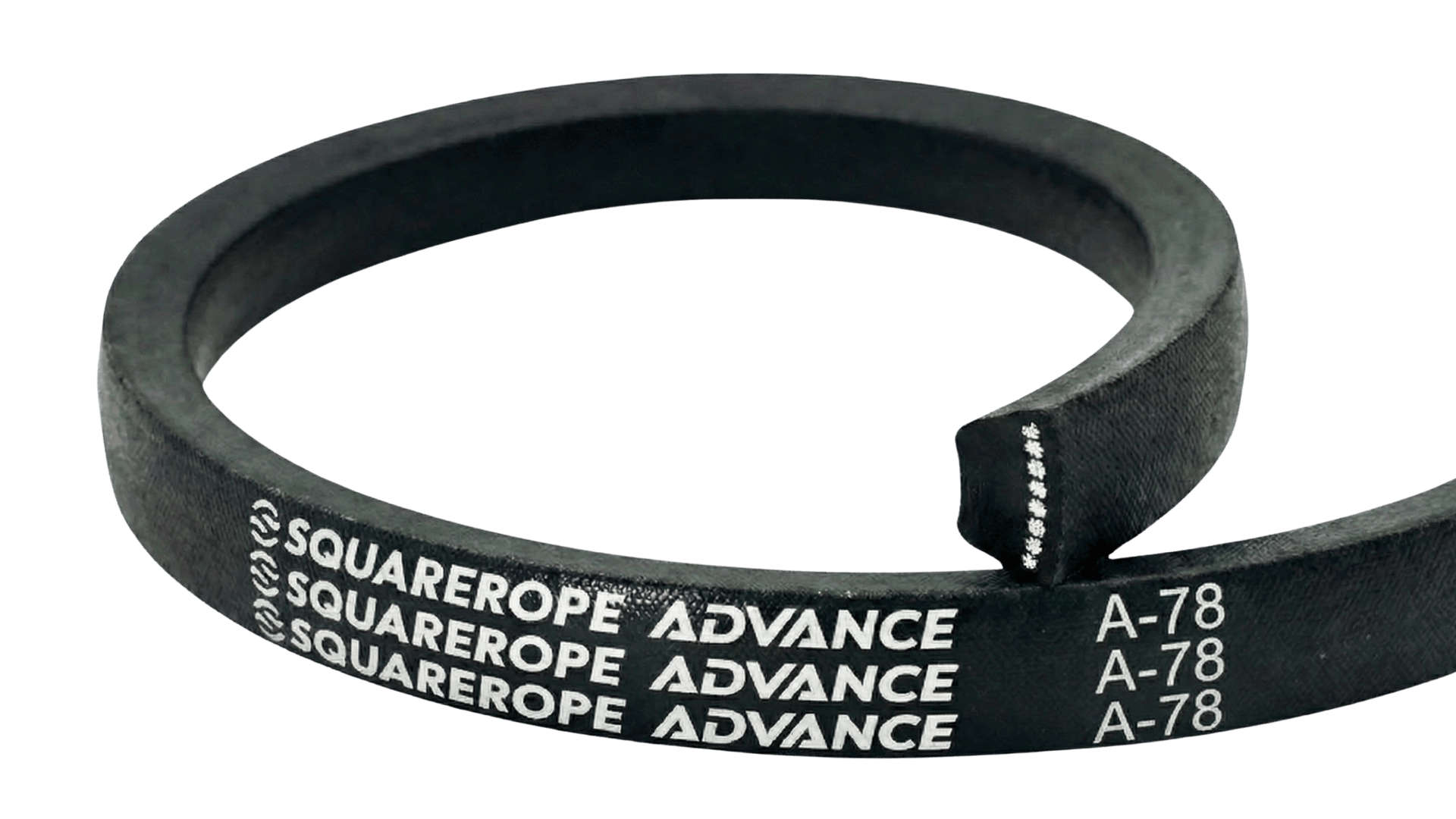
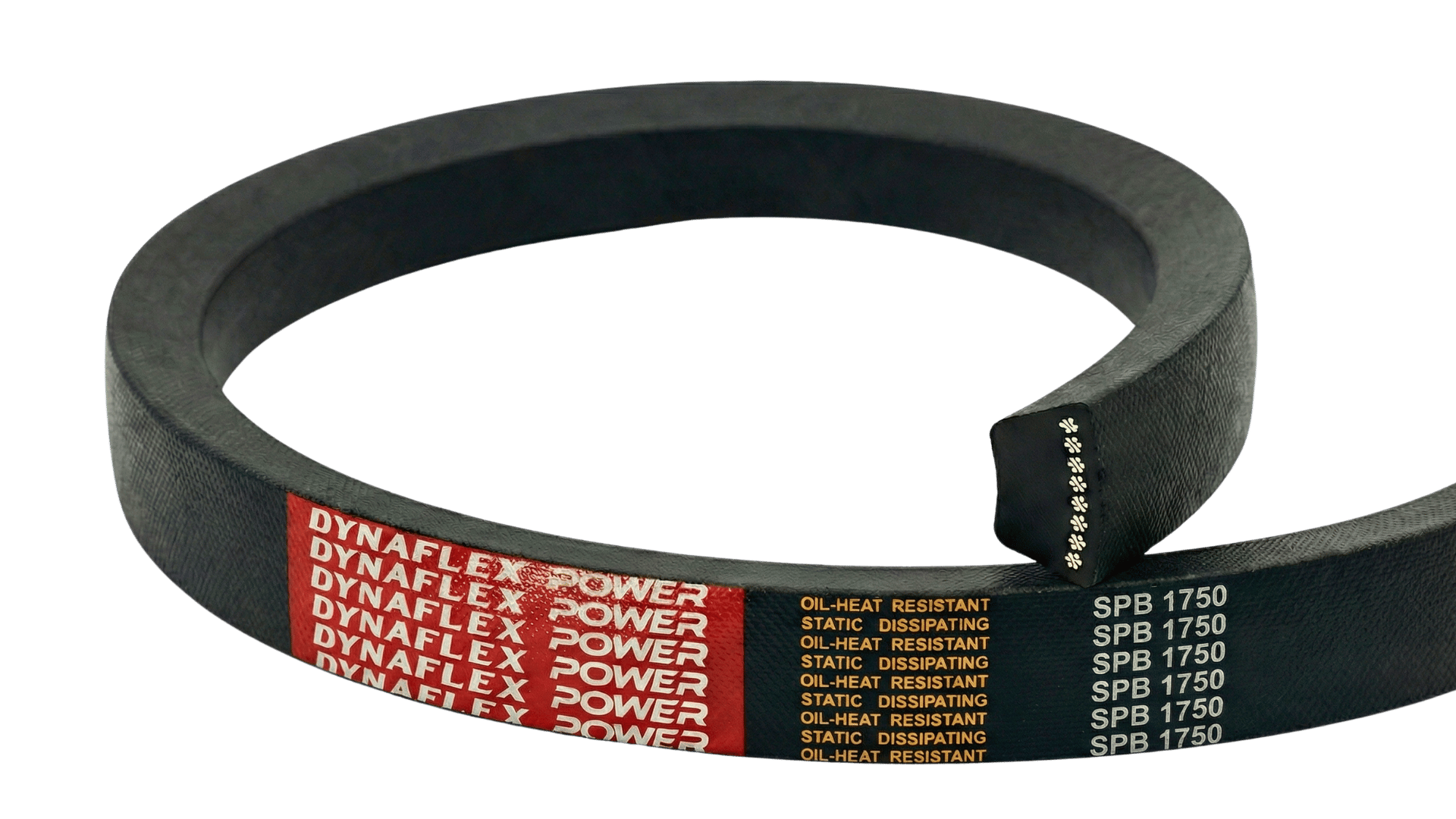
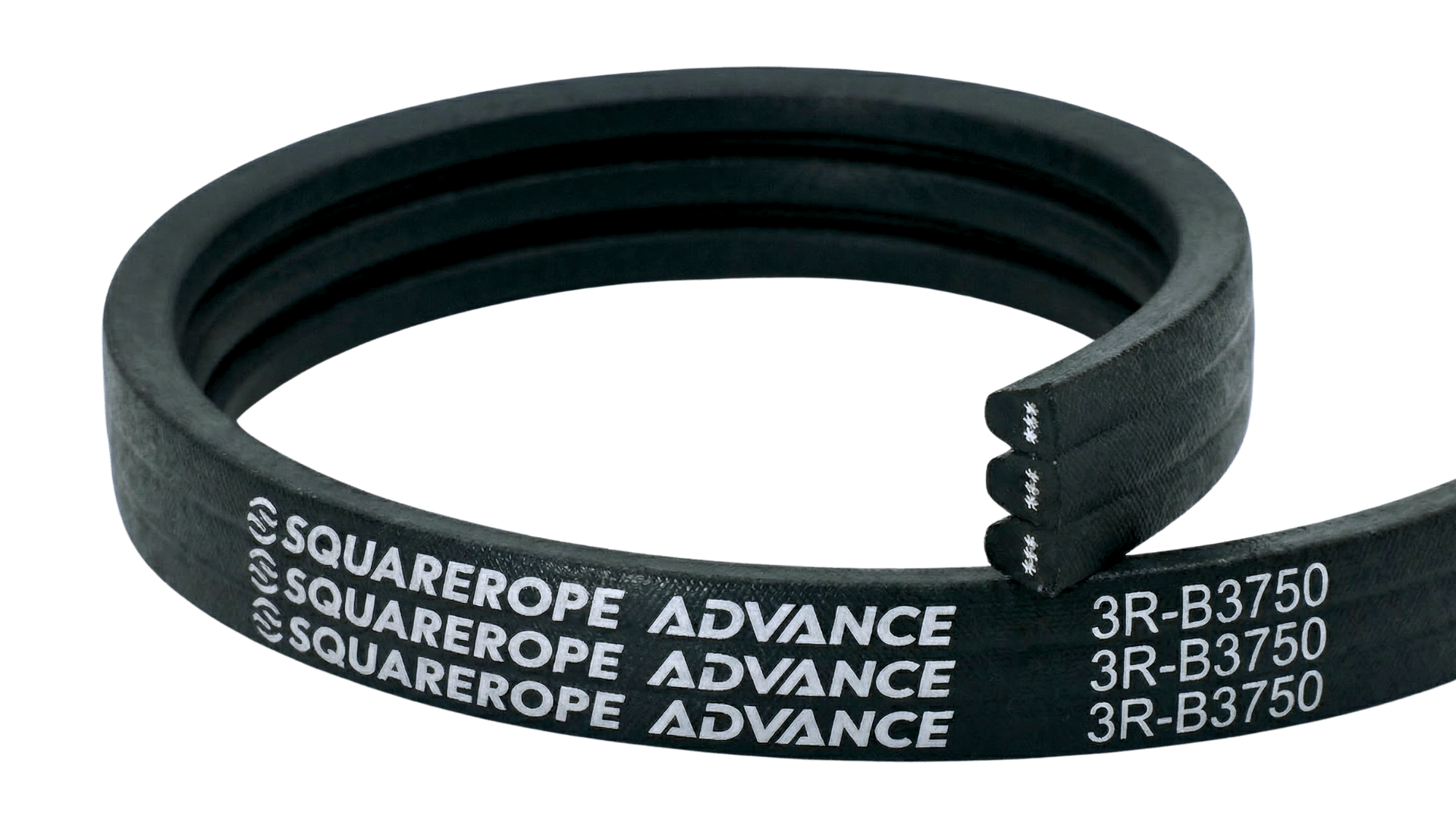
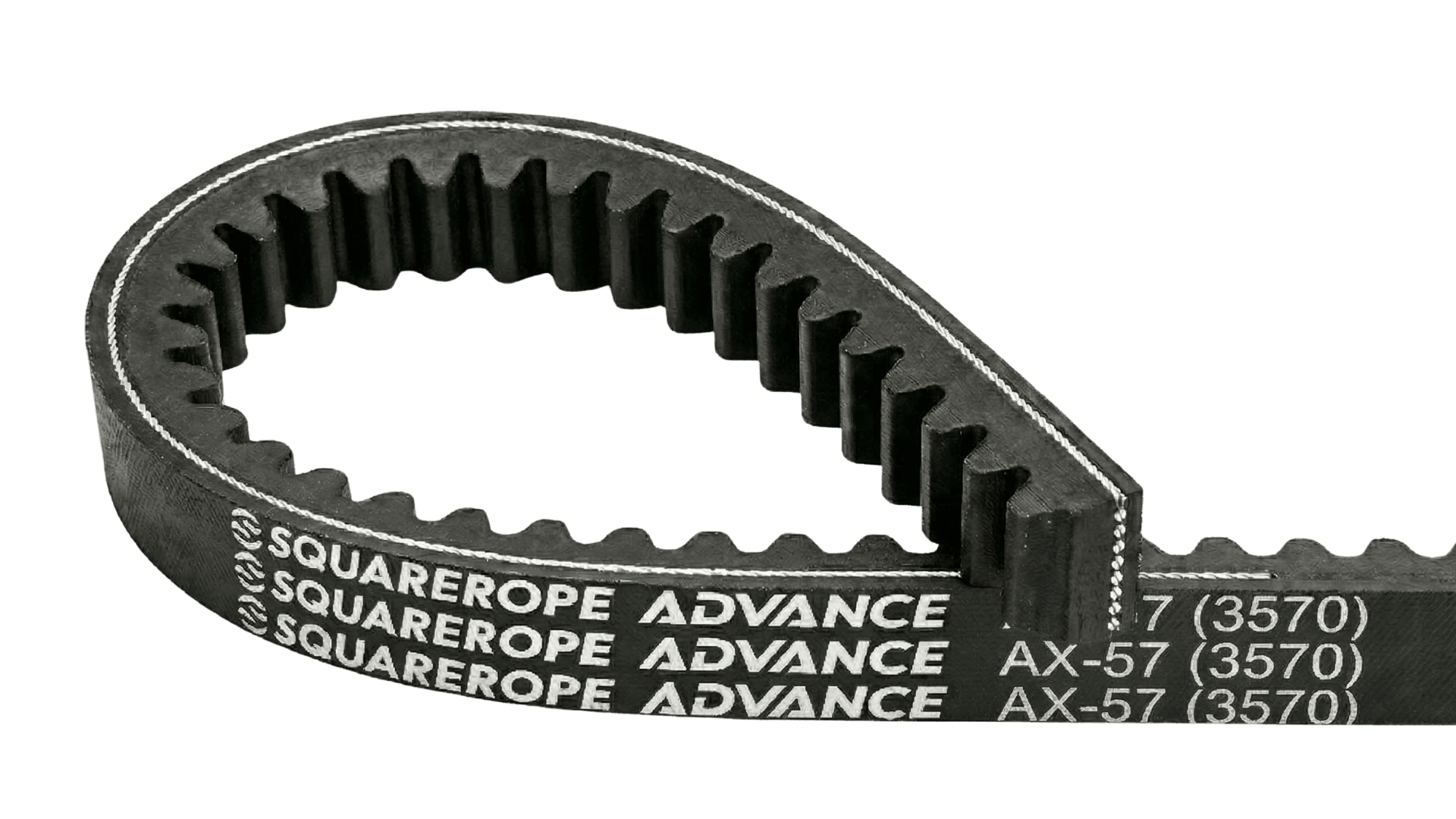
Incorrect selection is one recognized cause of premature V-belt failure, alongside drive design, installation, tension, alignment, sheave condition, maintenance, and environmental exposure. Use this guide to collect the required data and understand the calculation sequence; final approval must come from the current tables for one exact manufacturer and product family.
Data to Collect
Record and verify these inputs before selecting a profile:
- Record the driver and driven machine, actual transmitted power or torque, shaft speeds, starting method or torque, starts and stops, shock or pulsation, and daily operating hours.
- Record the small and large sheave datum or pitch diameters, target ratio, center distance, arc of contact, idlers, available take-up, guarding, and space constraints.
- Record temperature, dust, debris, water, oil, grease, chemicals, outdoor, ozone, and ultraviolet exposure, plus any static-conductivity, hazardous-area, flame, food-contact, or other approval requirements.
- Apply one exact current manufacturer design-load method to the recorded duty data; service or load factors and any special starting, shock, or pulsation review remain procedure-specific.
- Choose one candidate product family and profile only through that same manufacturer’s current selection diagram, then check the family-specific minimum sheave diameter and maximum belt speed.
- Use the exact series rating table, apply its ratio, arc-of-contact, and length corrections, and calculate the required belt or rib count.
- Choose compatible standard sheaves and a standard belt length; verify center distance, take-up, shaft load, installation tension, run-in, and retension instructions.
- Obtain final product, application, and installation approval for the complete drive, including matched-set replacement and any manufacturer-specified joined-belt requirement for pulsating, shock-loaded, or vibrating duty.
Design Power and Service Factor
For corresponding working, datum, or pitch diameters with slip neglected, the ideal driven speed is n₂ = n₁ × d₁ / d₂. Belt speed is v = πdn / 60 only when d is in metres and n is in revolutions per minute. Do not substitute outside diameters or mix diameter bases without the exact governing conversion.
Design load is not a neutral formula. Use the selected manufacturer’s current method and notation for service or load factors, starting behaviour, shock, pulsation, and daily operating hours; never choose an arbitrary oversizing percentage.
Profile and Belt Count
Use the selected manufacturer’s current profile-selection diagram and exact series rating table. There is no universal power-per-section value: capacity changes with the small sheave diameter and RPM, ratio, arc of contact, belt length, construction, and service conditions.
Inputs Required by the Rating Table
All values and correction methods must come from the selected manufacturer’s current catalogue.
| Rating input | What to verify | Role in the calculation |
|---|---|---|
| Product family and profile | One exact manufacturer series and candidate profile | Determines the applicable diagram, rating table, and correction factors |
| Design power | Running power and that manufacturer’s service factor | Sets the load basis for belt-count calculation |
| Small sheave | Datum or pitch diameter and shaft RPM | Determines the base rating and checks minimum diameter and speed |
| Speed ratio | Shaft speeds or corresponding sheave diameters | Applies the manufacturer’s ratio procedure or correction |
| Arc of contact | Actual wrap angle on the small sheave | Applies the maker’s arc-of-contact correction |
| Belt length | Compatible standard length and length basis | Applies length correction and verifies center distance and take-up |
| Belt or rib count | Corrected rating per belt or rib | Calculates total count using the manufacturer’s rounding rule |
- What to verify
- One exact manufacturer series and candidate profile
- Role in the calculation
- Determines the applicable diagram, rating table, and correction factors
- What to verify
- Running power and that manufacturer’s service factor
- Role in the calculation
- Sets the load basis for belt-count calculation
- What to verify
- Datum or pitch diameter and shaft RPM
- Role in the calculation
- Determines the base rating and checks minimum diameter and speed
- What to verify
- Shaft speeds or corresponding sheave diameters
- Role in the calculation
- Applies the manufacturer’s ratio procedure or correction
- What to verify
- Actual wrap angle on the small sheave
- Role in the calculation
- Applies the maker’s arc-of-contact correction
- What to verify
- Compatible standard length and length basis
- Role in the calculation
- Applies length correction and verifies center distance and take-up
- What to verify
- Corrected rating per belt or rib
- Role in the calculation
- Calculates total count using the manufacturer’s rounding rule
Source: SQUAREROPE Technical Team
Sheaves, Belt Speed, Center Distance, and Length
Keep the small sheave at or above the minimum diameter published for the exact belt family, calculate belt speed, and keep it within that family’s published limit. A molded-notch family may permit a smaller sheave than a comparable wrapped family, but only the exact manufacturer table can approve it.
Select compatible standard sheaves and a standard belt length, then recheck center distance, arc of contact, installation space, available take-up, and shaft load. Do not substitute SP and 3V, 5V, or 8V systems by width alone; confirm the profile, length convention, and groove within one manufacturer system.
Use the current Article 14 dimensions and length reference to distinguish datum, pitch, and other diameter or length bases before applying a calculation.
Environment and Compliance
Compound and construction must satisfy both the mechanical duty and the actual environment. A profile or construction name does not by itself prove resistance to oil, heat, ozone, weather, water, chemicals, flame, or static buildup.
Compare the recorded exposure with current technical data for the exact series. If static conductivity, hazardous-area use, or another approval is required, obtain the applicable certificate or declaration instead of assuming compliance from the belt type.
Use the current Article 02 construction and materials reference to separate physical construction from compound or environmental suitability before approving a family.
Shock Loads and Joined Belts
For pulsating, shock-loaded, or vibrating drives, consider a manufacturer-specified joined or banded belt with compatible sheave grooves. Its tie band can help control whip and turnover where the maker recommends that construction, but it is not a universal solution.
Installation, Tension, and Matched Sets
Inspect sheave-groove condition and alignment, install the belt without prying it into the groove, and set the exact manufacturer installation tension. Follow that family’s run-in and retension schedule rather than applying a generic tension value.
Replace every belt in a multiple-belt drive as one set. Never mix old and new belts or different manufacturers; use the same maker, product family, profile, nominal length, and approved matching system.
Worked Example: Known and Missing Data
Assume a blower requires 30 hp, or 22.4 kW, the driver runs at 1,750 rpm, and the 150 mm driver and 300 mm driven dimensions are corresponding datum or pitch diameters:
30 hp Blower Example
If 150 mm and 300 mm are outside diameters, convert them by the manufacturer’s method before using the ratio, speed, or belt-speed results.
| Category | Item | Result or requirement |
|---|---|---|
| Known | Running power | 30 hp = 22.4 kW |
| Known | Driver | 1,750 rpm; corresponding datum or pitch diameter 150 mm |
| Known | Driven sheave | Corresponding datum or pitch diameter 300 mm |
| Calculable | Nominal speed ratio | 2:1 |
| Calculable | Driven speed | Approximately 875 rpm before allowing for slip |
| Calculable | Belt speed | Approximately 13.7 m/s |
| Missing | Duty data | Starting method and torque, daily hours, shock or pulsation, and maker service factor |
| Missing | Geometry and installation | Center distance, standard length, arc, take-up, groove condition, shaft load, and tension |
| Missing | Selection and environment | Exact family rating, belt count, environment, and approval requirements |
- Item
- Running power
- Result or requirement
- 30 hp = 22.4 kW
- Item
- Driver
- Result or requirement
- 1,750 rpm; corresponding datum or pitch diameter 150 mm
- Item
- Driven sheave
- Result or requirement
- Corresponding datum or pitch diameter 300 mm
- Item
- Nominal speed ratio
- Result or requirement
- 2:1
- Item
- Driven speed
- Result or requirement
- Approximately 875 rpm before allowing for slip
- Item
- Belt speed
- Result or requirement
- Approximately 13.7 m/s
- Item
- Duty data
- Result or requirement
- Starting method and torque, daily hours, shock or pulsation, and maker service factor
- Item
- Geometry and installation
- Result or requirement
- Center distance, standard length, arc, take-up, groove condition, shaft load, and tension
- Item
- Selection and environment
- Result or requirement
- Exact family rating, belt count, environment, and approval requirements
Source: Calculations from the stated scenario; final selection still requires the exact manufacturer design procedure
The available data cannot approve a final profile, product family, construction, compound, length, belt or rib count, tension, or purchase. Supply every missing input and complete one exact current manufacturer procedure before making a final choice.
Final Selection Checklist
Before approving the order, confirm that:
- Driver, driven machine, power or torque, speeds, starting conditions, shock, and daily hours are recorded.
- Corresponding sheave diameters, ratio, center distance, arc of contact, idlers, take-up, and space are known.
- One manufacturer and exact product family have been selected using current diagrams and tables.
- Design power uses that manufacturer’s service factor rather than a generic margin.
- Belt or rib count includes the specified ratio, arc-of-contact, and length corrections.
- Sheave grooves, standard belt length, minimum diameter, maximum speed, and shaft load are compatible.
- Environment, chemicals, static, and hazardous-area requirements have exact-series evidence.
- Installation tension, run-in, and retension procedures are defined.
- Shock or vibration duty has been checked for a maker-specified joined belt and compatible grooves.
- A multiple-belt drive will receive a complete set without mixed ages or manufacturers.
When the selection is confirmed, use the Article 20 quote checklist to send a supplier the drive data, belt designation, quantity, and delivery needs in one request.
A reliable selection must be traceable to complete drive data and the current catalogue for one exact product family. If a required input is missing, obtain it instead of substituting an equipment-name rule or a generic power range.
Key Takeaway
What information is needed to select a V-belt?
Record the load, shaft speeds, starting and duty conditions, sheave geometry, environment, and compliance needs; then use one exact manufacturer’s service-factor, rating, dimensional, and tension tables.
Need help checking the drive data and product family? Review our V-Belt and SP Power Belt product pages, or contact SQUAREROPE for application-selection support.