A part number is not a universal interchange code
The same letters or numbers can use different length bases, units, construction meanings, or regional conventions. Never approve a substitute from the marking alone; verify the exact product family, sheave groove, ratings, environment, and tension procedure.
A useful V-belt marking usually contains several clues, but there is no single syntax shared by every manufacturer and product family. Read the marking as profile family, construction or assembly markers, length value and length basis, then confirm every conclusion in the current catalog.
1. Record the complete marking first
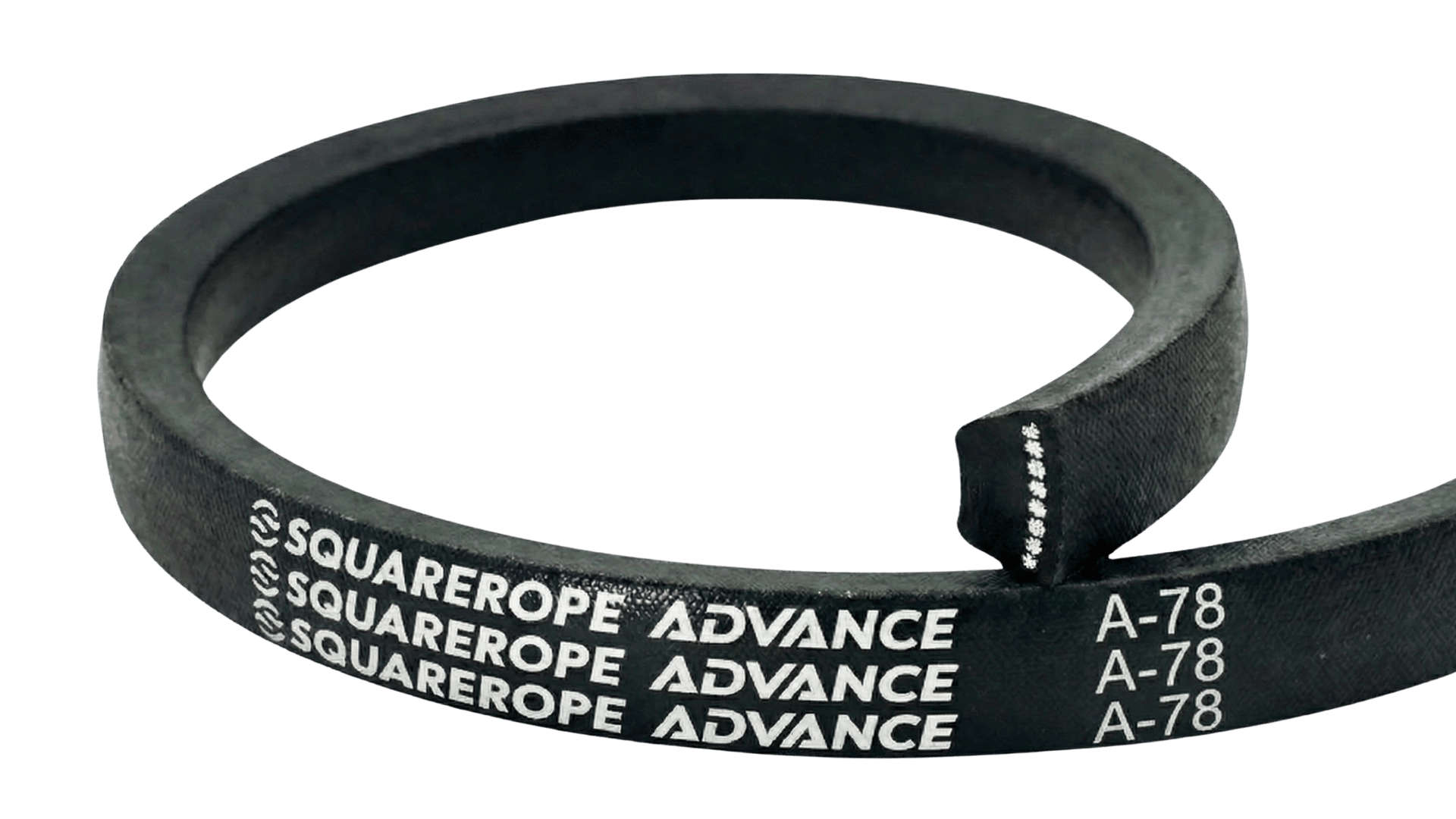
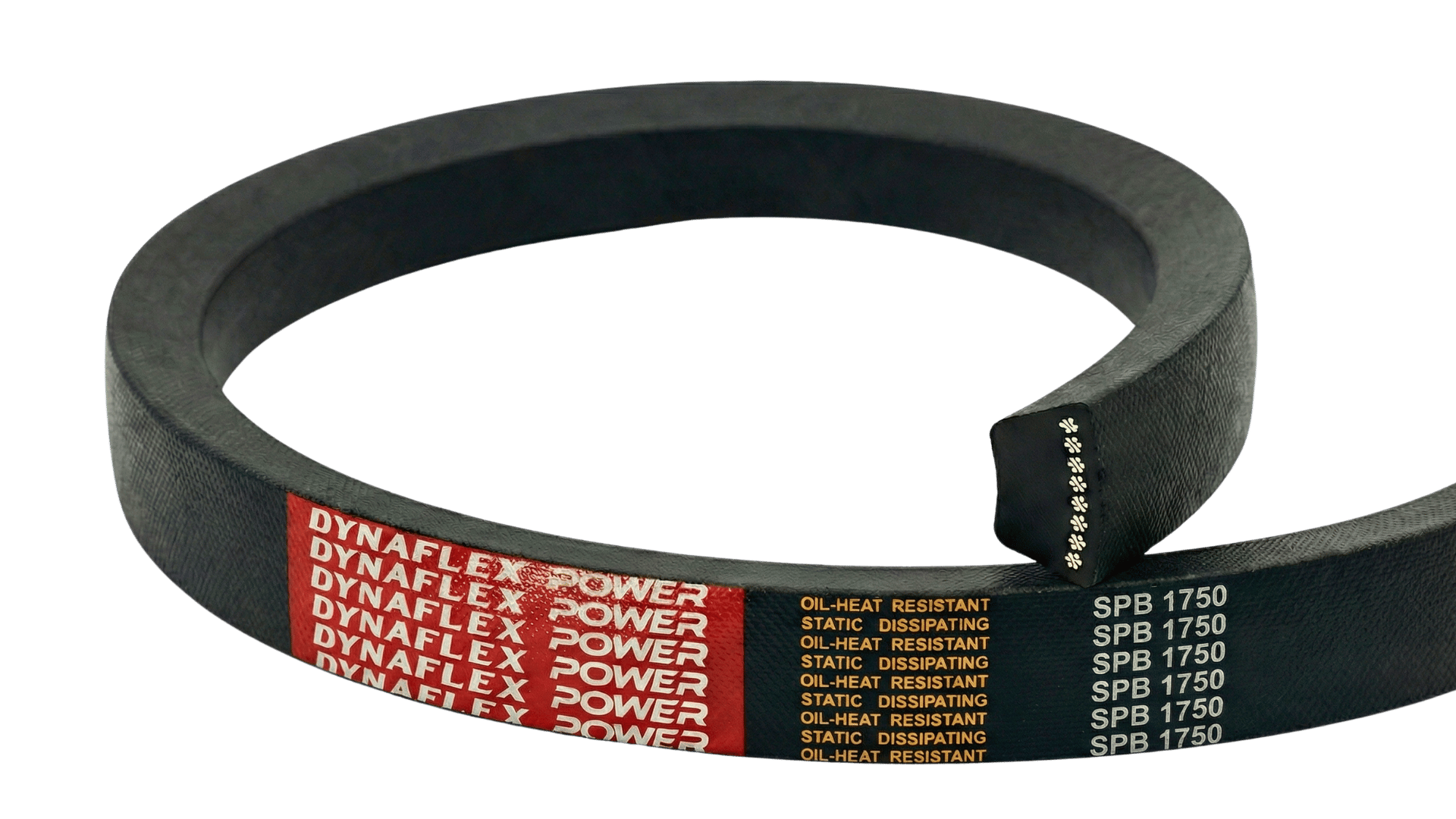
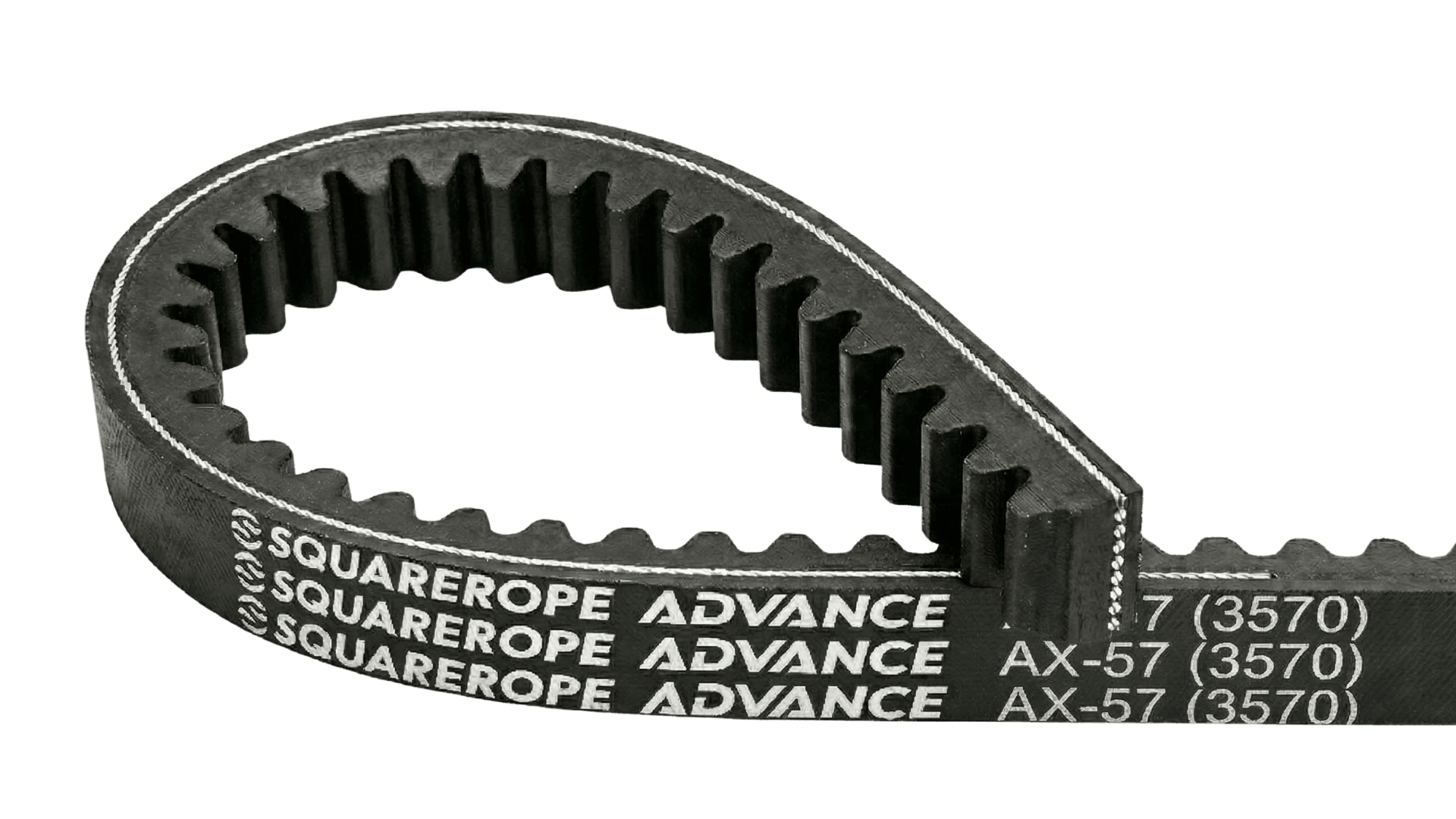
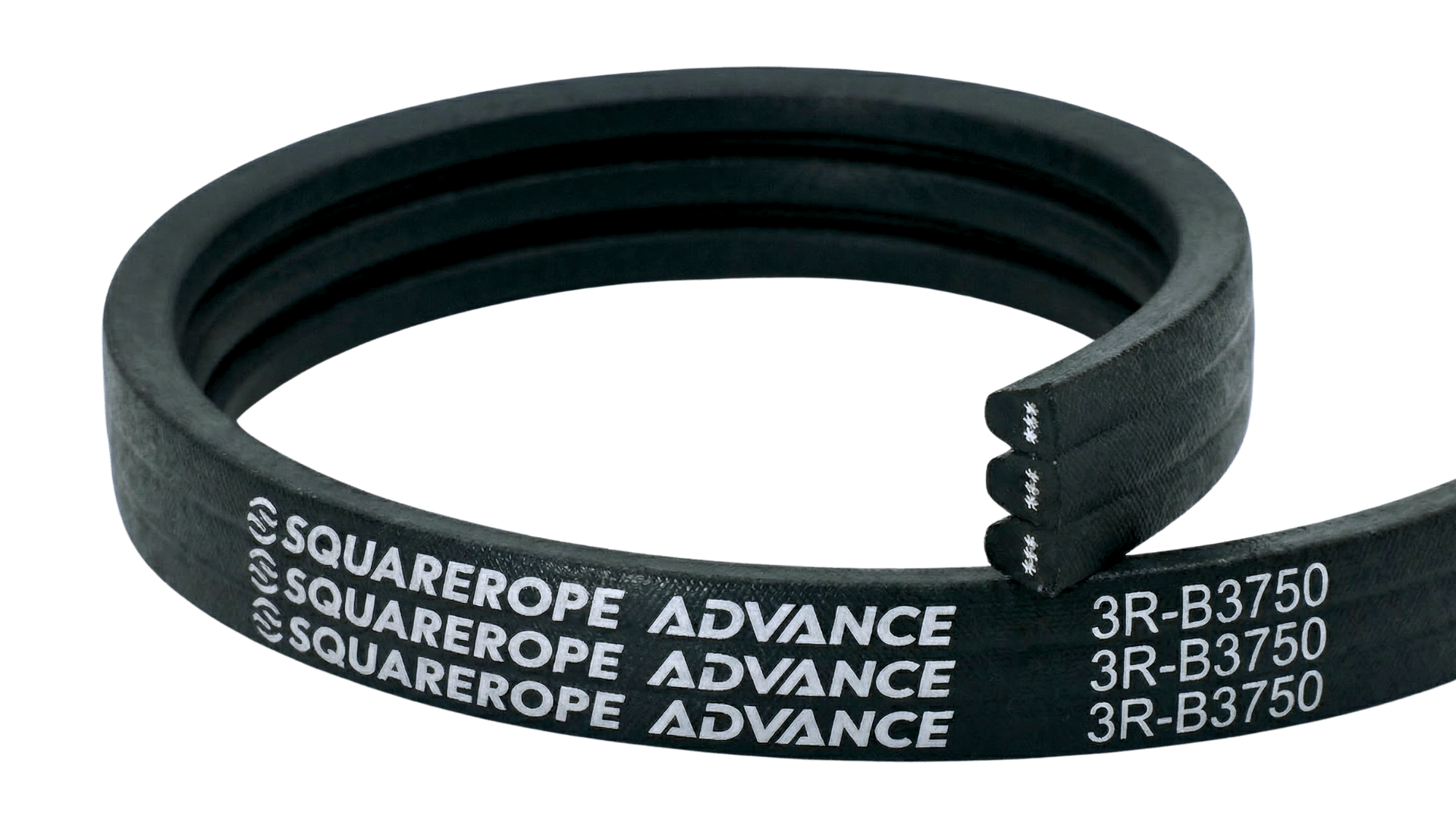
Photograph every line before cleaning the belt. Record the brand, product-family name, complete alphanumeric code, prefixes, suffixes, printed length symbols, arrows, strand or rib count, matching code, manufacturing or trace code, and any approval mark. Keep spacing, slashes, hyphens, and decimal points exactly as printed.
Separate a commercial stock or order number from the descriptive belt designation. Record both exactly when both appear, but do not infer a product family from a numeric stock code or decode a profile token without the applicable current family data.
2. Identify the profile family
Separate the layers in a designation
Record each layer first; interpret it only in the source that governs the selected family.
| Layer | What to record | Decision boundary |
|---|---|---|
| Classical profile token | Y, Z, A, B, C, D, or E when present | ISO 4184 scope does not decode the remaining commercial string |
| Narrow profile token | SPZ, SPA, SPB, or SPC when present | Confirm the applicable edition, groove, and product family |
| Construction or assembly marker | Every prefix, suffix, separator, and strand marker | Meaning varies by manufacturer and family |
| Numeric segment | Digits, decimals, units, and adjacent symbols exactly | A number has no safe length meaning until its basis is known |
| Stock or order number | Record separately from the descriptive designation | It may locate a product but does not describe fit by itself |
- What to record
- Y, Z, A, B, C, D, or E when present
- Decision boundary
- ISO 4184 scope does not decode the remaining commercial string
- What to record
- SPZ, SPA, SPB, or SPC when present
- Decision boundary
- Confirm the applicable edition, groove, and product family
- What to record
- Every prefix, suffix, separator, and strand marker
- Decision boundary
- Meaning varies by manufacturer and family
- What to record
- Digits, decimals, units, and adjacent symbols exactly
- Decision boundary
- A number has no safe length meaning until its basis is known
- What to record
- Record separately from the descriptive designation
- Decision boundary
- It may locate a product but does not describe fit by itself
Source: SQUAREROPE Technical Team — original designation-layer synthesis informed by ISO 4184:2025 and ISO 1081:2013
3. Decode construction and assembly separately
A prefix or suffix may describe construction or assembly in one product family and mean something different in another. Record it exactly, then use only the selected family’s current data to interpret it.
The absence of a marker does not prove wrapped or raw-edge sidewalls, notches, cover fabric, compound, tensile cord, approvals, or operating limits. Verify those attributes separately.
Joined-belt syntax is also family-specific. Record strand count and separators as evidence, but do not infer one universal prefix rule or use the code alone to approve a replacement.
4. Determine the length basis and units
Length is the most dangerous part of a cross-reference because inside, outside, datum, effective, and pitch lengths are different reference paths. Review the industrial V-belt dimensions and length reference before converting values. ISO 1081 describes datum-width and effective-width systems as independent. A catalog may show more than one length for the same physical belt.
Do not add a fixed number of inches or millimetres to convert one basis to another. The difference depends on the profile and manufacturer convention. Use the exact conversion row or product record, and record both the value and its symbol or basis.
Length symbols and reference paths
Symbols follow common catalog usage, but the selected manufacturer definition controls.
| Symbol or term | Meaning | Identification rule |
|---|---|---|
| Li | Inside length or inside circumference | Use only where the catalog labels the value Li or inside length |
| La | Outside length or outside circumference | Do not enter it as an inside, datum, or effective value |
| Ld | Datum length in the datum system | Common for SPZ, SPA, SPB, and SPC catalogs; retain millimetres and the Ld basis |
| Le | Effective length in the effective system | Keep separate from datum length unless the exact catalog provides a conversion |
| Lp or Lw | Pitch-length symbols used by some catalogs | Record the symbol exactly and use only the definition in the applicable family data; do not treat it as Ld or Le by default |
| No printed symbol | Basis is unresolved from the belt alone | Find the exact family table or product page before decoding the number |
- Meaning
- Inside length or inside circumference
- Identification rule
- Use only where the catalog labels the value Li or inside length
- Meaning
- Outside length or outside circumference
- Identification rule
- Do not enter it as an inside, datum, or effective value
- Meaning
- Datum length in the datum system
- Identification rule
- Common for SPZ, SPA, SPB, and SPC catalogs; retain millimetres and the Ld basis
- Meaning
- Effective length in the effective system
- Identification rule
- Keep separate from datum length unless the exact catalog provides a conversion
- Meaning
- Pitch-length symbols used by some catalogs
- Identification rule
- Record the symbol exactly and use only the definition in the applicable family data; do not treat it as Ld or Le by default
- Meaning
- Basis is unresolved from the belt alone
- Identification rule
- Find the exact family table or product page before decoding the number
Source: SQUAREROPE Technical Team — original length-basis recording guidance informed by ISO 1081:2013 and ISO 4184:2025
5. Work through catalog-verified examples
The following strings show how to separate observed tokens from conclusions. They are not product records, conversion rules, or interchange approvals.
Three bounded marking examples
Each row shows what may be recorded before the exact family, length basis, and application have been verified.
| Observed marking | What it can narrow | What remains unresolved |
|---|---|---|
| A 38 | A possible classical-profile token plus a numeric token | Length basis, unit, product family, construction, rating, and fit |
| SPZ 1000 | A possible SPZ-family token plus a numeric length token | Length basis, unit, edition, construction, rating, and fit |
| SPB 1250 Ld | A possible SPB-family token, numeric token, and explicit basis symbol | Applicable edition, unit, tolerance, construction, groove, and rating |
- What it can narrow
- A possible classical-profile token plus a numeric token
- What remains unresolved
- Length basis, unit, product family, construction, rating, and fit
- What it can narrow
- A possible SPZ-family token plus a numeric length token
- What remains unresolved
- Length basis, unit, edition, construction, rating, and fit
- What it can narrow
- A possible SPB-family token, numeric token, and explicit basis symbol
- What remains unresolved
- Applicable edition, unit, tolerance, construction, groove, and rating
Source: SQUAREROPE Technical Team — original code-reading decision guide
6. Cross-reference without assuming interchangeability
For a defensible replacement, complete all six checks:
- Capture the full original marking, manufacturer, family name, machine record, and installed position before disposal.
- Identify the profile from the marking and the correct groove/profile gauge; treat worn belt width and height only as supporting clues.
- Resolve the length value, unit, and basis—Li, La, Ld, Le, Lp, Lw, inside, outside, datum, or effective—from the exact catalog.
- Identify sidewall/cover construction, molded-notch geometry, single or joined assembly, compound, cord, and approvals as separate attributes.
- Verify sheave groove compatibility, standard length, power and speed rating, minimum sheave diameter, environment, static or regulatory requirements, and the exact tension procedure.
- For a multiple-belt drive, record the belt count and configuration, then apply the selected family’s current matched-set and replacement policy; do not assume one universal rule.
7. If the marking is unreadable
If the marking is missing, damaged, or contradictory, stop decoding and use the physical V-belt identification workflow to preserve evidence, measure the belt, determine the length basis, and verify the replacement.
Measure length only by the belt maker’s specified method and label the result with its basis. A stretched, damaged, or worn belt introduces uncertainty. Submit the evidence to the manufacturer or qualified distributor and obtain a documented cross-reference before returning a critical drive to service.
8. Final identification checklist
Before approving the replacement, confirm:
- The brand, family, complete marking, separators, suffixes, and trace information are recorded.
- The commercial stock number and belt description have not been confused.
- The profile family and exact groove dimensions are compatible.
- The length value, units, and reference basis are explicit.
- No generic inside-to-outside or datum-to-effective conversion was used.
- Construction, notch geometry, assembly, compound, cord, and approvals were checked separately.
- Any X, strand prefix, or suffix was decoded from that manufacturer’s current catalog.
- Ratings, minimum sheave diameter, speed, environment, and tension procedure match the drive.
- The belt count and configuration are recorded, and the selected family’s current set policy was applied.
- The selected cross-reference is documented and approved for the actual application.
A V-belt code narrows the search; it does not finish the selection. Preserve the complete marking, identify the profile and exact length basis, separate construction from material and assembly, and approve the replacement only from current manufacturer data.
Key Takeaway
What does a V-belt part number tell you?
It can identify a profile family, construction or assembly marker, and a length value, but the units and length basis are manufacturer- and series-specific. Confirm the exact current catalog before substitution.
Need help documenting a belt cross-reference? Review our V-Belt and SP Power Belt product pages, or contact SQUAREROPE with photos and the drive data.