A compound name is not a product approval
General elastomer charts are useful for screening, but they do not establish the performance of a finished V-belt. Approve the exact manufacturer, product family, construction, materials, ratings, environmental limits, and certificates for the real drive.
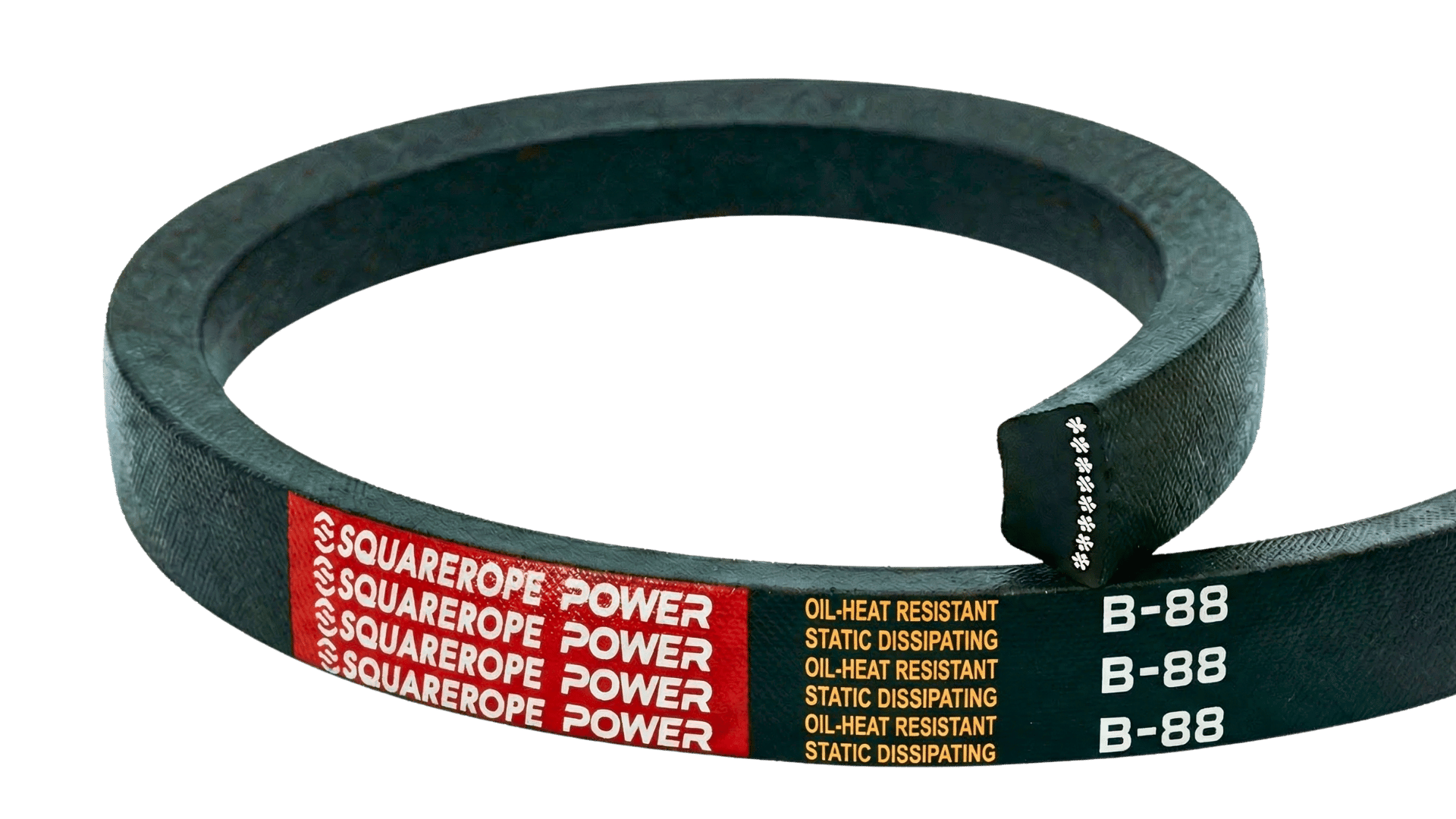
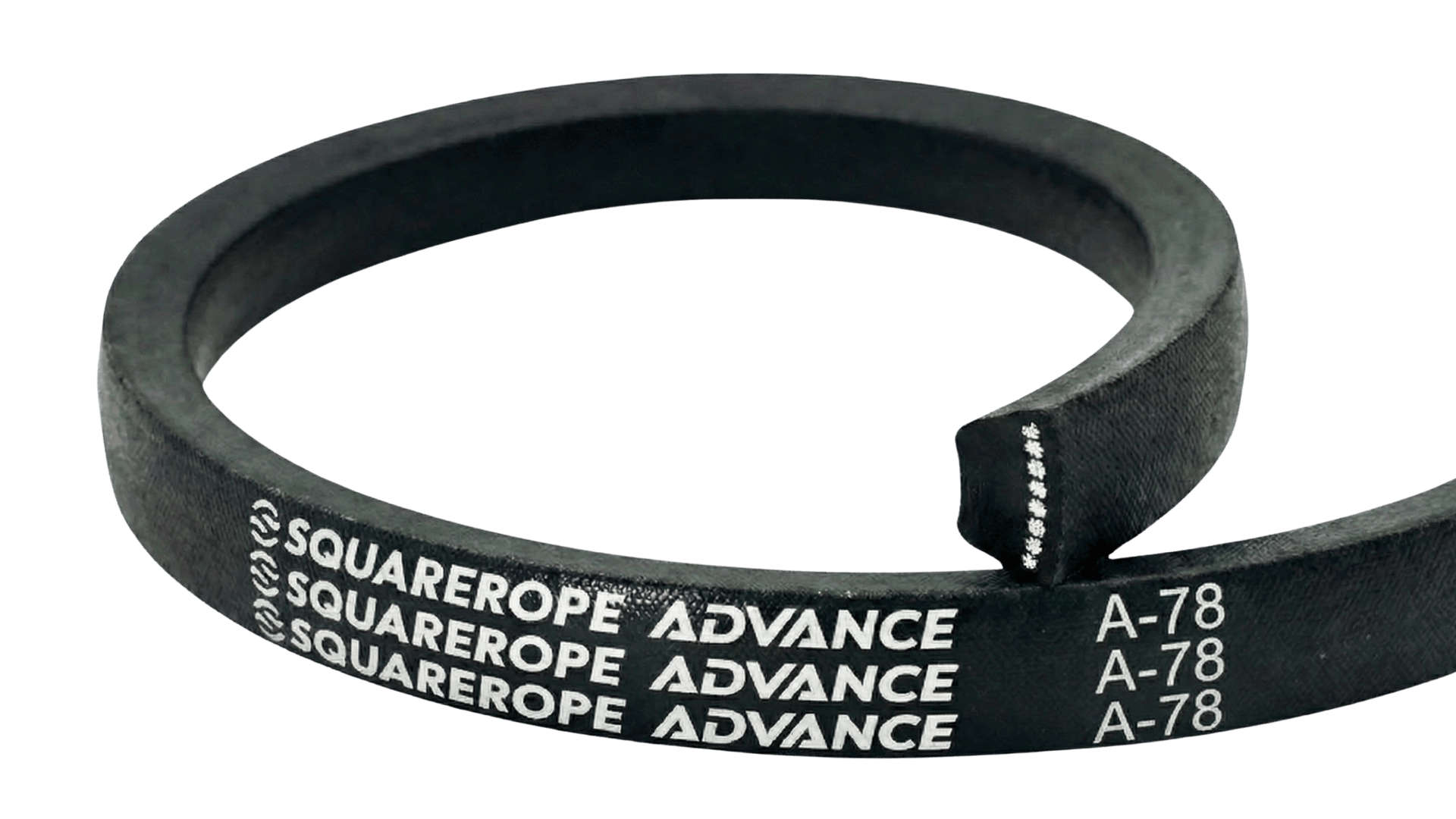
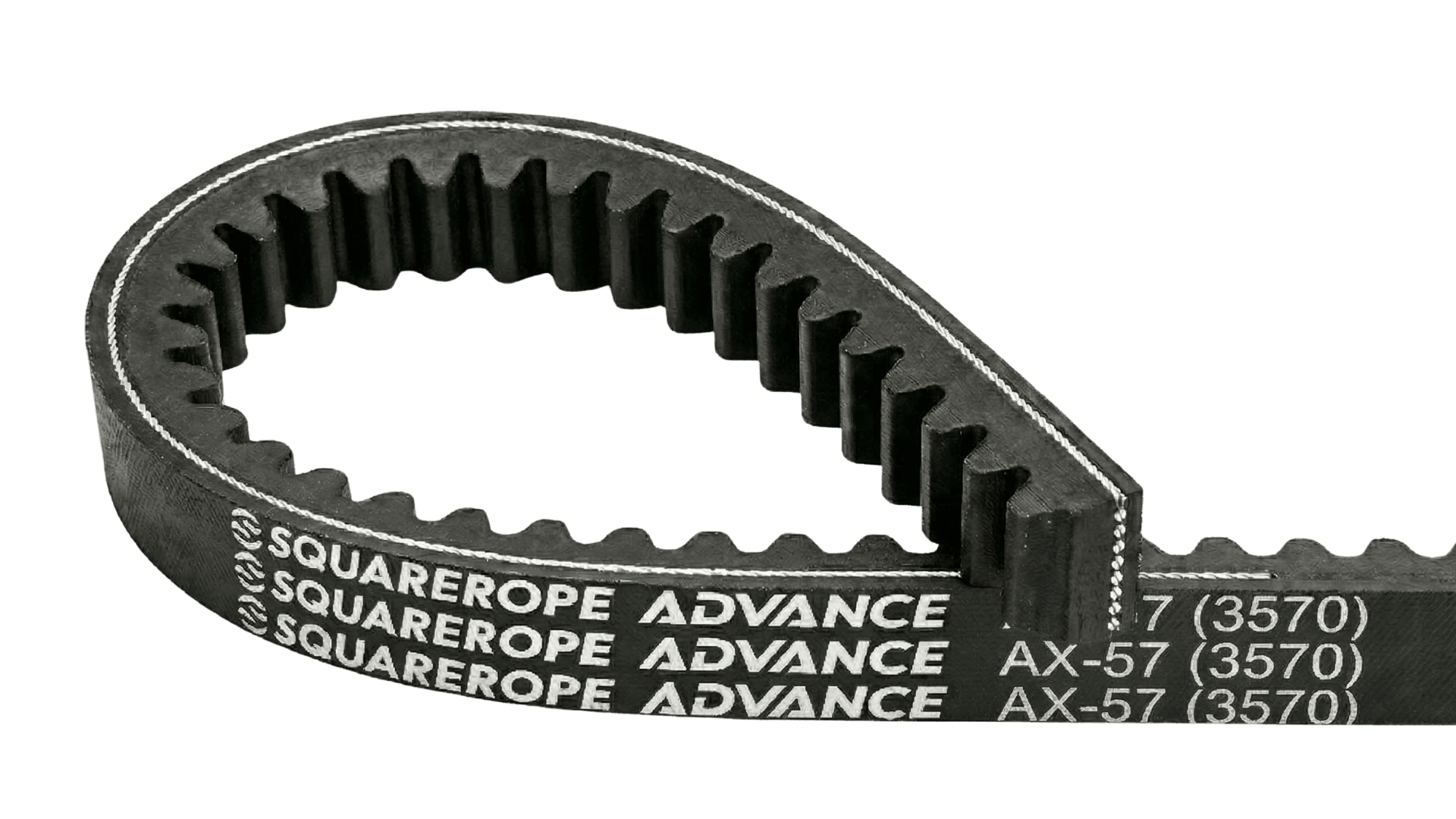
Compound selection is one part of V-belt specification. The body compound, tensile cord, cover fabric, sidewall construction, profile, length, pulley system, rating, and tension procedure all belong to the exact product family. A material acronym or brand name cannot replace that product-level evidence. V-belt construction and material layers explain why a body-compound name does not specify the whole belt.
Use the material names correctly
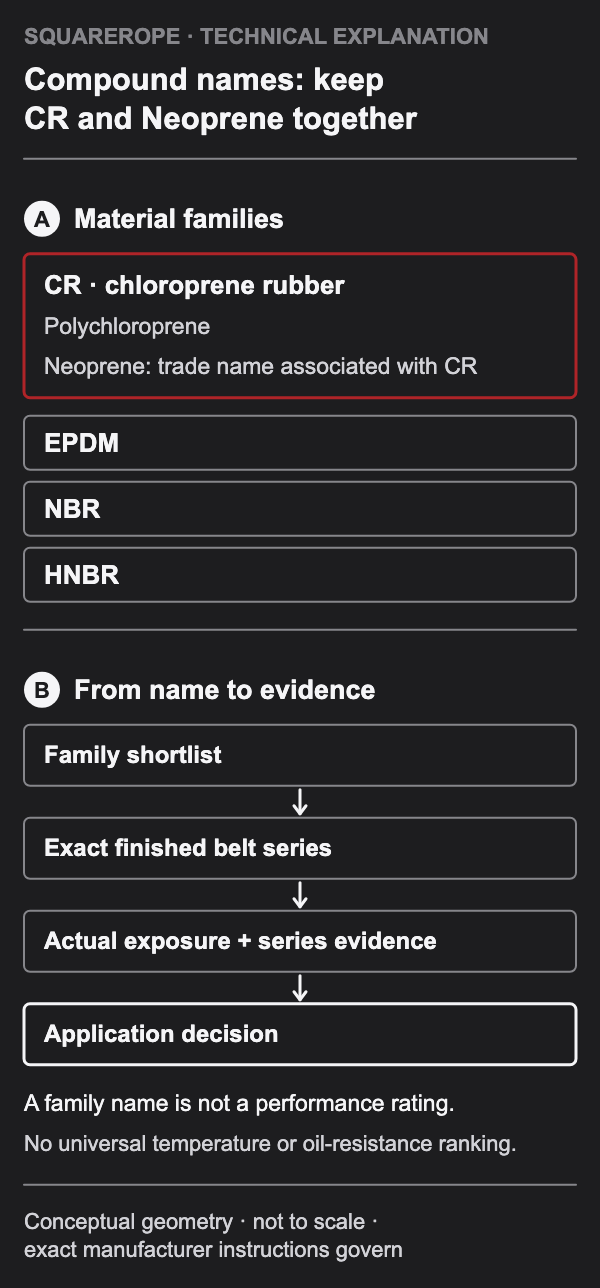
CR means chloroprene rubber, or polychloroprene. Neoprene is a trade name commonly associated with this material, not a separate generic elastomer alongside CR and chloroprene. In a neutral specification, write chloroprene rubber (CR) and preserve a supplier trade name only when it identifies an actual documented grade.
EPDM is ethylene propylene diene rubber, NBR is nitrile rubber, and HNBR is hydrogenated nitrile rubber. These names describe elastomer families, not a complete belt construction or a guaranteed temperature, oil, weather, static, flame, power, or service-life rating.
Screen four common elastomer families
Compound screening table
Use these directions only to identify candidate families; the exact belt-series documentation controls.
| Elastomer family | General screening direction | Do not assume |
|---|---|---|
| CR / chloroprene | Consider documented CR grades for mechanical duty; verify weather and fluid exposure for the finished belt | Universal oil, flame, temperature, static, or service-life approval |
| EPDM | Candidate for heat, weather and ozone exposure; obtain exact petroleum-fluid compatibility before selection | Compatibility with oil mist, grease, fuel, solvents, or every high-temperature drive |
| NBR / nitrile | Common candidate when petroleum-oil or fuel exposure matters; verify the exact fluid and grade | Outdoor, ozone, heat, immersion, or chemical approval without the exact grade and belt data |
| HNBR | Candidate for combined oil, heat and ozone requirements; grade and formulation still control | That every HNBR belt outperforms CR, EPDM, or NBR in the actual drive |
- General screening direction
- Consider documented CR grades for mechanical duty; verify weather and fluid exposure for the finished belt
- Do not assume
- Universal oil, flame, temperature, static, or service-life approval
- General screening direction
- Candidate for heat, weather and ozone exposure; obtain exact petroleum-fluid compatibility before selection
- Do not assume
- Compatibility with oil mist, grease, fuel, solvents, or every high-temperature drive
- General screening direction
- Common candidate when petroleum-oil or fuel exposure matters; verify the exact fluid and grade
- Do not assume
- Outdoor, ozone, heat, immersion, or chemical approval without the exact grade and belt data
- General screening direction
- Candidate for combined oil, heat and ozone requirements; grade and formulation still control
- Do not assume
- That every HNBR belt outperforms CR, EPDM, or NBR in the actual drive
Source: SQUAREROPE application-screening framework; not product test data
Understand what a comparison can—and cannot—prove
Chemical compatibility depends on the exact fluid, concentration, temperature, exposure time, pressure, motion, contamination and belt formulation. “Oil resistant” may mean occasional splash only; it does not approve immersion, fuel, solvents or food contact. A material change does not correct a leak or authorize deliberate lubrication of the belt. Correct contamination at its source and assess the affected belt under the manufacturer’s instructions.
Temperature ranges, ozone and UV resistance, conductivity, flame behavior, and regulatory compliance are product-family claims. Published material-property charts can help reject an obviously unsuitable candidate, but the finished belt may contain multiple rubber stocks, fibres, cords, fabrics, adhesion systems, and coatings.
Require evidence for the finished belt series
Even within HNBR, grade selection matters: acrylonitrile content and degree of hydrogenation affect the balance of oil resistance, low-temperature flexibility and ozone behavior. Ask for the documented grade and finished-belt evidence; the family name cannot resolve these tradeoffs.
For the selected V-belt, obtain the body compound, cord and cover materials; exact temperature range; chemical compatibility; weather, ozone and UV limits; static-conductivity status and certificate where required; flame or hazardous-area evidence; power and speed ratings; pulley limits; and installation-tension and run-in instructions.
Select the compound from the actual exposure
Evaluate the application in this order:
- Identify the driver, driven machine, exact belt marking, product family, construction, profile, length and quantity.
- Record running and peak load, speeds, starts, daily hours, shock, pulsation, slip history and pulley geometry. Before close inspection, isolate all energy, control stored energy and verify de-energization under the machine procedure; restore guards before operation.
- List every fluid and contaminant by name, concentration and temperature, and distinguish vapour, mist, splash, washdown, intermittent contact and immersion.
- Record ambient and internal drive temperature, outdoor exposure, sunlight, ozone sources, water, humidity, dust and debris.
- Document static, flame, hazardous-area, food-contact or other regulatory requirements and the required certificate or test method.
- Use a general chemical chart only to shortlist elastomer families, then choose one manufacturer’s exact belt series.
- Obtain written series-level compatibility, environmental limits, ratings, pulley limits, tension and maintenance instructions from the maker or supplier.
- For mixed fluids, continuous exposure, high temperature, safety-critical service, or any condition outside published data, obtain application-specific manufacturer approval.
Record the product-level approval
The purchasing and maintenance record should contain:
- Manufacturer, product family, full designation, profile, length basis, construction and quantity.
- Documented body compound, tensile-cord material, cover or backing fabric, adhesion and coating information relevant to the exposure.
- Fluid or chemical names, concentrations, temperatures, exposure mode and duration, plus the supplier compatibility decision.
- Ambient and drive temperatures, outdoor, ozone, UV, water, humidity, dust and contamination limits.
- Current product-family certificate for static conductivity, flame, hazardous-area, food-contact or other required compliance.
- Current rating table, power, speeds, pulleys, wrap, length corrections, belt count and shaft-load verification.
- Specified installation tension, calibrated measurement method, run-in, retension and inspection procedure.
- Named approver, source-document revision, exceptions, expiry or revalidation date, and change-control requirement.
Do not infer a SQUAREROPE-wide material baseline
Do not infer a SQUAREROPE-wide compound from brand, profile, colour, wrapped or raw-edge construction, or product category. Confirm the material in current documents for the exact supplied belt series; this guide establishes no brand-wide CR, EPDM, NBR or HNBR baseline.
Until exact current series documents are available, describe CR, EPDM, NBR, and HNBR as candidate material families and route the application to product-level verification. If the supplied product changes, repeat the approval rather than carrying the old compound assumption forward.
Choose the finished belt system, not an acronym. The correct compound is the one documented for the exact belt series, real fluids and environment, complete drive rating, and required compliance—not the one with the broadest generic reputation.
Key Takeaway
Which V-belt compound should I choose: CR, EPDM, NBR, or HNBR?
Use the actual heat, weather, ozone, oil, fuel, chemical, and compliance conditions to shortlist a material, then approve only the exact belt series whose published construction, compatibility, ratings, and tension data cover the drive.
Need help verifying compound evidence? Review the V-Belt range and Oil-Heat Resistant Belt, or contact SQUAREROPE with the complete belt marking, fluid details, temperatures, and drive data.