Gather installed-drive data safely
Read markings or observe an operating drive only from a safe position behind its compliant guard. Before removing a guard or touching, measuring, cleaning, or manually rotating the drive, trained and authorized personnel must follow the machine and site procedure: shut down, identify and isolate every hazardous energy source, lock or tag as required, control stored energy, verify de-energization, and place components in a safe state.
A purchase order should preserve an approved replacement or define a fully reviewed redesign. A familiar code, matching top width, equipment name, low price, or supplier assurance cannot establish fit, power capacity, environment compatibility, or regulatory status. The buyer needs one traceable specification that connects the real drive to the exact product family and the evidence required at release and receipt.
What to send with an industrial V-belt quote request
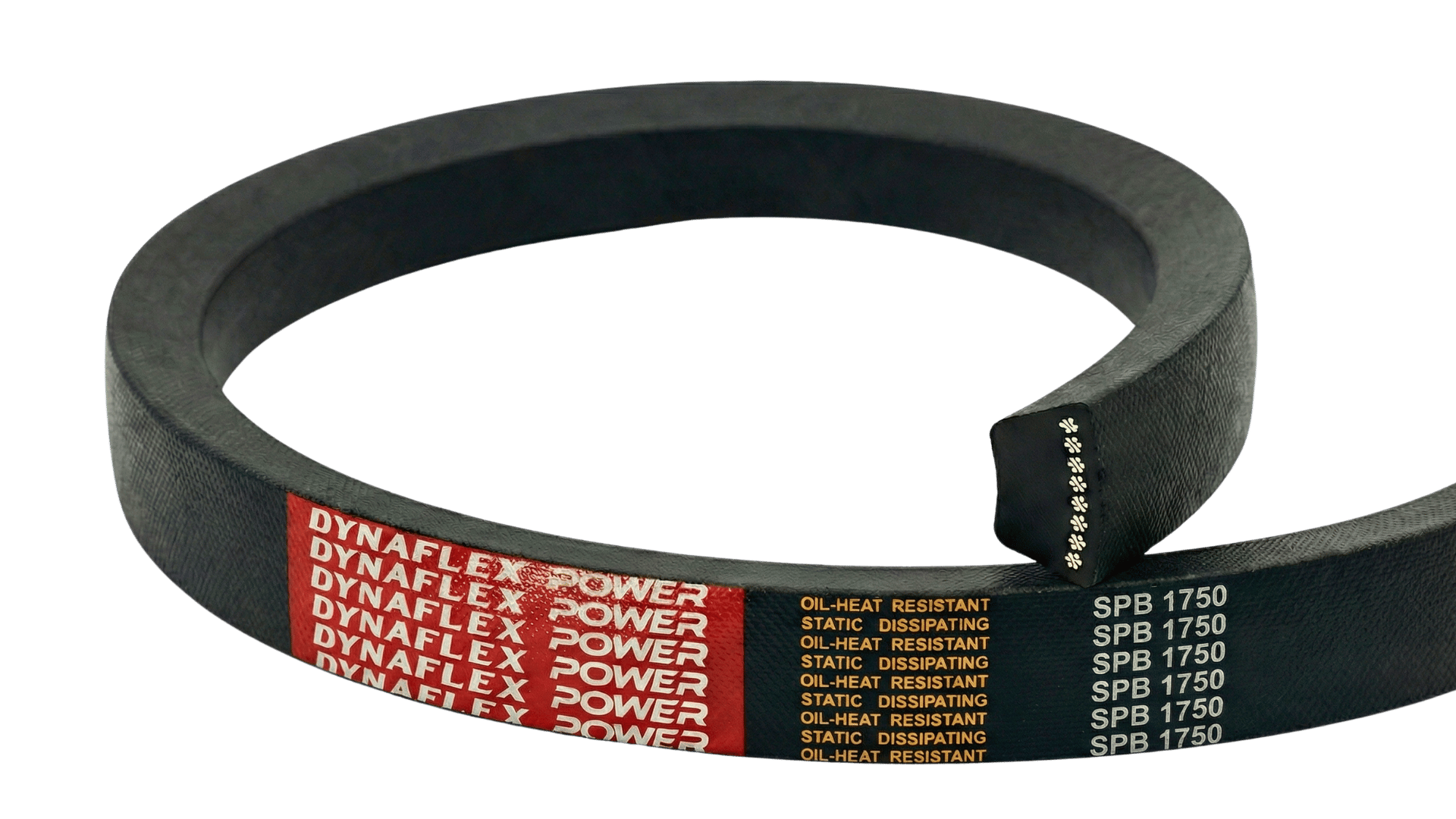
This list covers classical, narrow (SP), cogged and banded V-belts; timing, flat and conveyor belts need different data. The more of these seven items you send, the faster a supplier can confirm the part, the price and the lead time. The example column shows a replacement set of SPB-1750 narrow V-belts. Its values are illustrative: the belt count and tension still need the manufacturer’s drive calculation.
Quote request checklist
Fill in every row; where a value is unknown, send photos or measurements instead.
| Item | What to provide | Example (replacing SPB-1750) |
|---|---|---|
| Marking and identity | Full marking on the old belt (photo or transcription), manufacturer, machine name and model | Marked “SPB-1750”; air compressor drive |
| Section and construction | Section code; wrapped or raw-edge; plain or cogged; single or banded | SPB; wrapped; plain; single belts |
| Length and length basis | Length value, unit and basis (Li, La, Ld, Lw, Le or the catalogue’s own definition) | 1750 mm; the catalogue lists this length as Ld |
| Quantity and matching | Belts per drive, matched-set requirement, total quantity and spares | 4 belts per drive as one matched set; 3 machines plus 1 spare set |
| Duty and geometry | Motor power, speed, pulley diameters (state outside or datum), centre distance, daily hours, starting and shock loads | 22 kW; 1480 rpm; datum diameters 200 / 400 mm; centre distance about 390 mm; 16 h per day |
| Materials and environment | Temperature, oil, water, chemicals, dust, outdoor exposure, antistatic or other requirements | Indoors; up to 45 °C; no oil contact; antistatic required |
| Delivery and documents | Required date, delivery address, packing and labelling, documents you need | Delivered to the buyer’s plant within 2 weeks; each set packed and labelled with its batch |
- What to provide
- Full marking on the old belt (photo or transcription), manufacturer, machine name and model
- Example (replacing SPB-1750)
- Marked “SPB-1750”; air compressor drive
- What to provide
- Section code; wrapped or raw-edge; plain or cogged; single or banded
- Example (replacing SPB-1750)
- SPB; wrapped; plain; single belts
- What to provide
- Length value, unit and basis (Li, La, Ld, Lw, Le or the catalogue’s own definition)
- Example (replacing SPB-1750)
- 1750 mm; the catalogue lists this length as Ld
- What to provide
- Belts per drive, matched-set requirement, total quantity and spares
- Example (replacing SPB-1750)
- 4 belts per drive as one matched set; 3 machines plus 1 spare set
- What to provide
- Motor power, speed, pulley diameters (state outside or datum), centre distance, daily hours, starting and shock loads
- Example (replacing SPB-1750)
- 22 kW; 1480 rpm; datum diameters 200 / 400 mm; centre distance about 390 mm; 16 h per day
- What to provide
- Temperature, oil, water, chemicals, dust, outdoor exposure, antistatic or other requirements
- Example (replacing SPB-1750)
- Indoors; up to 45 °C; no oil contact; antistatic required
- What to provide
- Required date, delivery address, packing and labelling, documents you need
- Example (replacing SPB-1750)
- Delivered to the buyer’s plant within 2 weeks; each set packed and labelled with its batch
Source: SQUAREROPE quotation practice; SPB-1750 and its length basis from the SQUAREROPE product catalogue
If the marking is worn off, send photos of the belt and pulleys, the measured top width and height, and the pulley diameters, groove count and centre distance; the supplier can confirm the section and length from those. The sections below explain how to confirm each item, which evidence to ask for, and how to inspect the delivery. When the data is ready, send it to SQUAREROPE for a quote.
Start with the installed drive and approved design
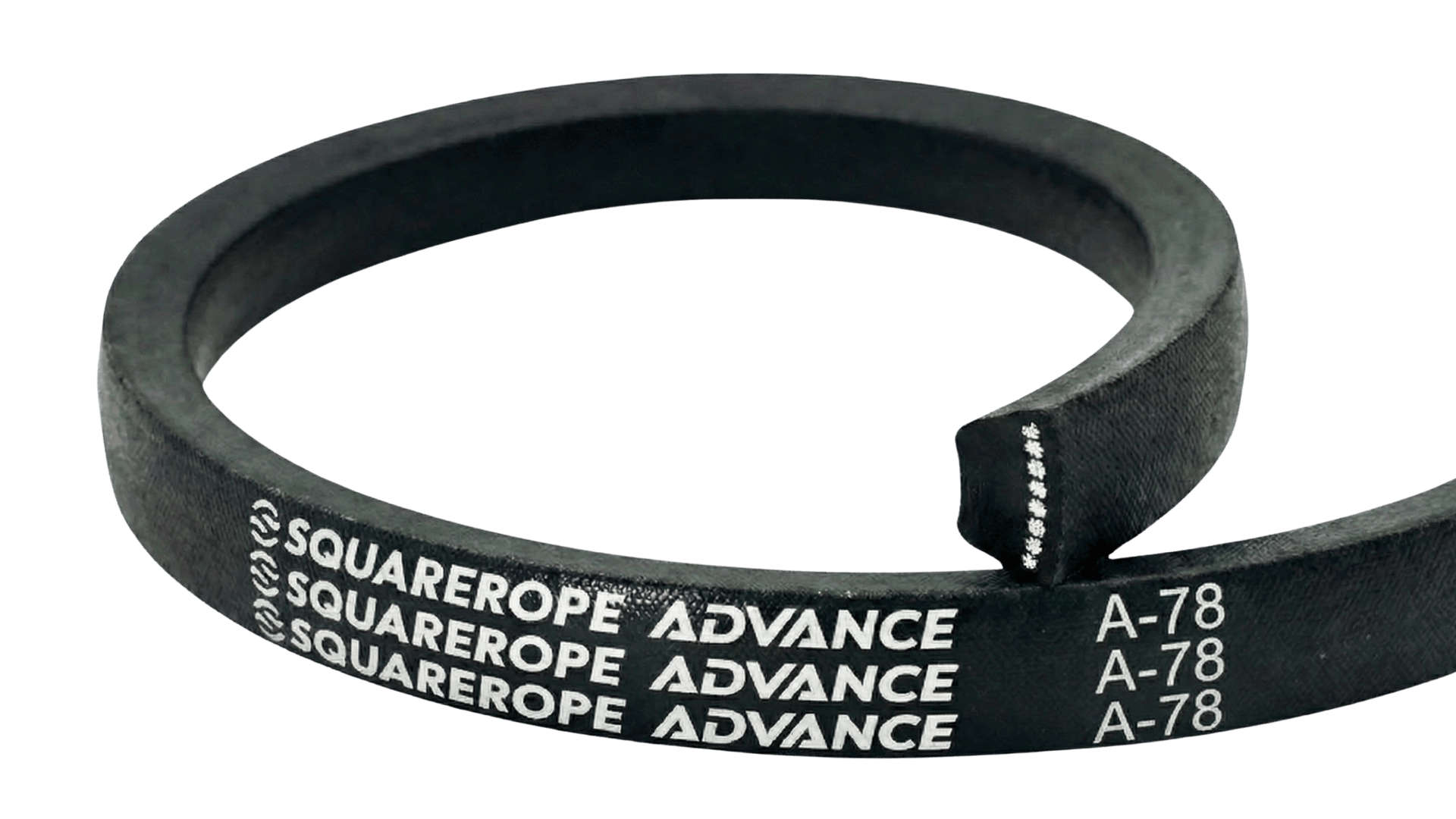
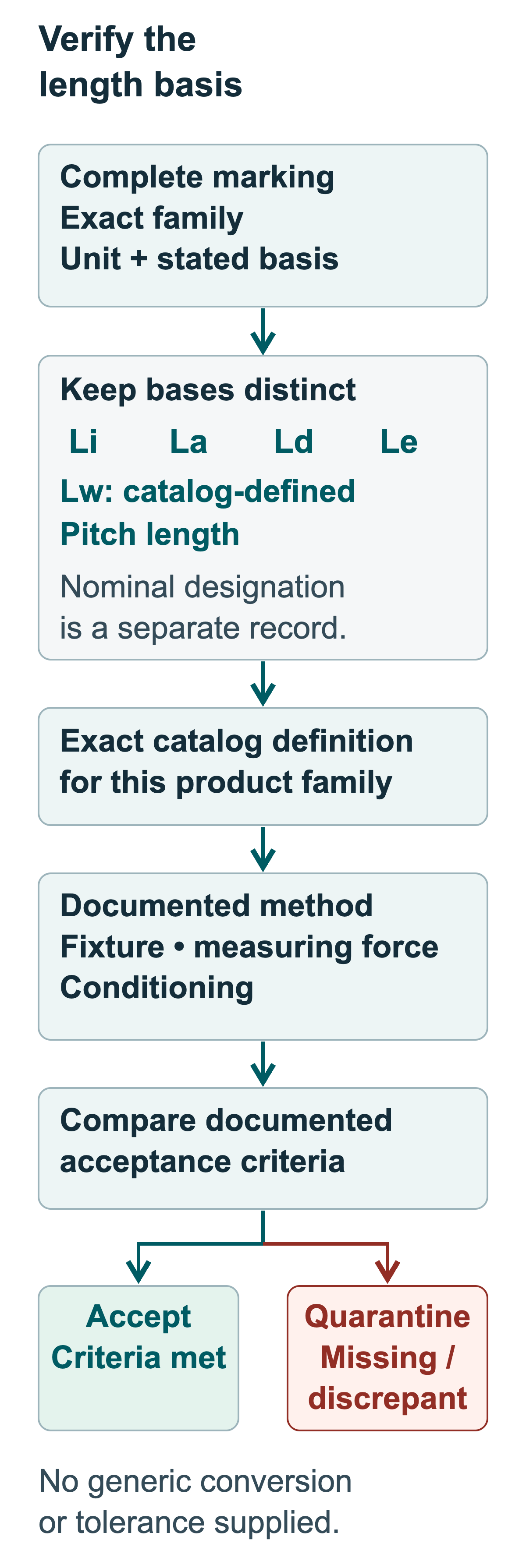
For an approved like-for-like replacement, capture the complete readable marking, manufacturer, product family, profile, construction, length designation and basis, quantity or matched-set rule, and the machine or OEM reference. If any element is missing or the proposed source differs, treat the order as an engineering review rather than assuming interchangeability from width or a similar code. Keep nominal designation, inside length (Li), outside length (La), datum length (Ld or a catalog-defined Lw), pitch length, and effective length (Le) distinct. Record the exact catalog definition and measuring method; a code containing the same number does not establish the same physical belt. If marking, OEM reference, drawing or supplier records conflict, hold the request for reconciliation by the authorized engineer. Specify new traceable belts; used or refurbished parts require explicit engineering evidence and approval. Consult the reference guide to identify the belt profile and exact length basis.
For a redesign, record driver and driven equipment, actual power or torque, shaft speeds, starting method and torque, hours, shock or pulsation, sheave datum or pitch diameters, ratio, center distance, wrap, idlers, take-up, guard space, environment, and required approvals. Select the family and belt count only through the current manufacturer diagram, service factor, rating and correction tables, minimum-sheave and speed limits, shaft-load check, and tension procedure. Refer to the selection guide to select the drive and validate its calculation inputs.
Build one procurement specification
Procurement specification and evidence matrix
Each row is a separate release requirement. A catalog family name does not prove the other rows.
| Requirement | Evidence to send with the request | Release criterion |
|---|---|---|
| Installed identity or approved design | Photograph or transcription of the full marking, OEM part reference, drive drawing and revision | Exact approved replacement, or documented engineering approval for a change |
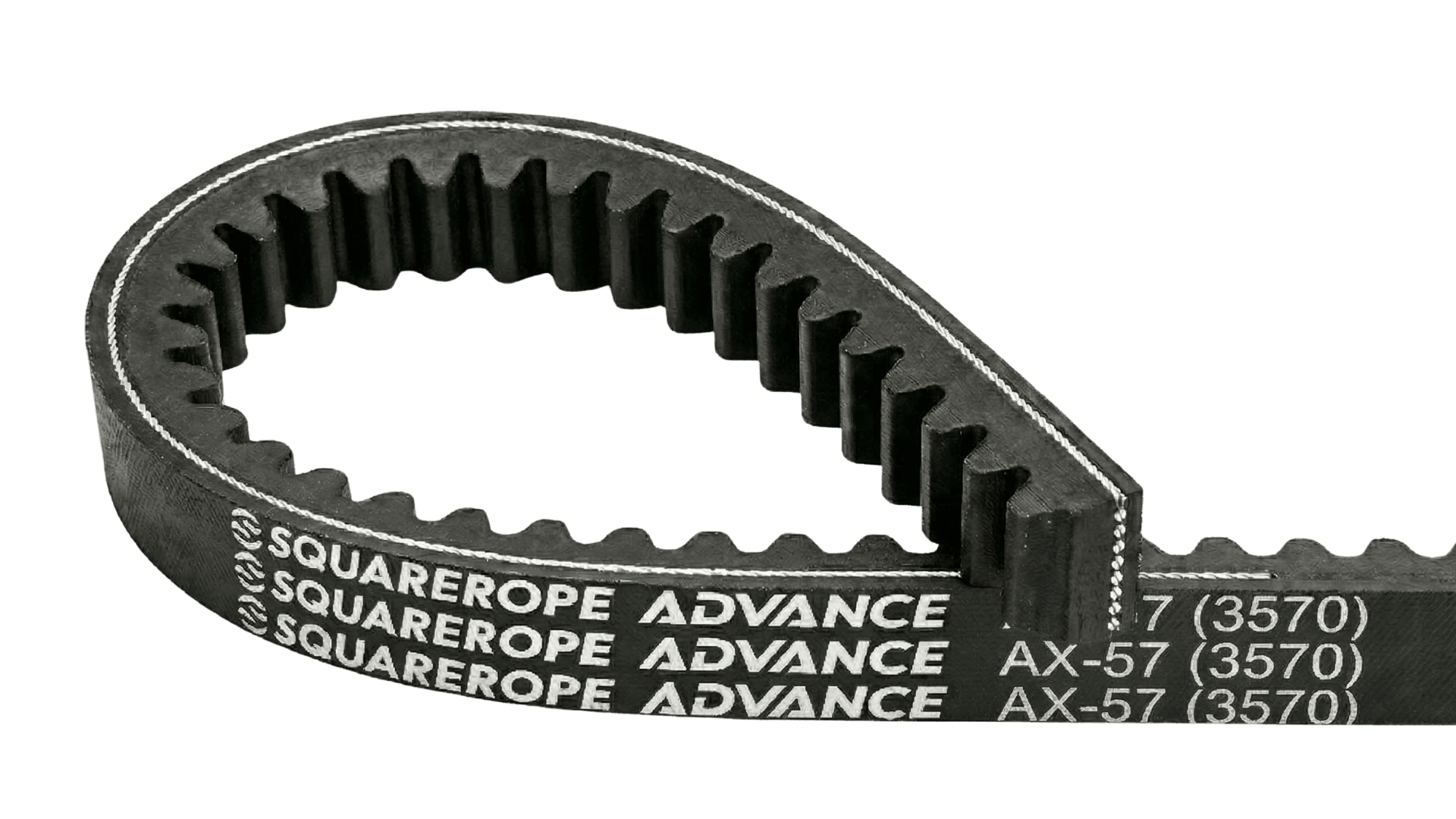
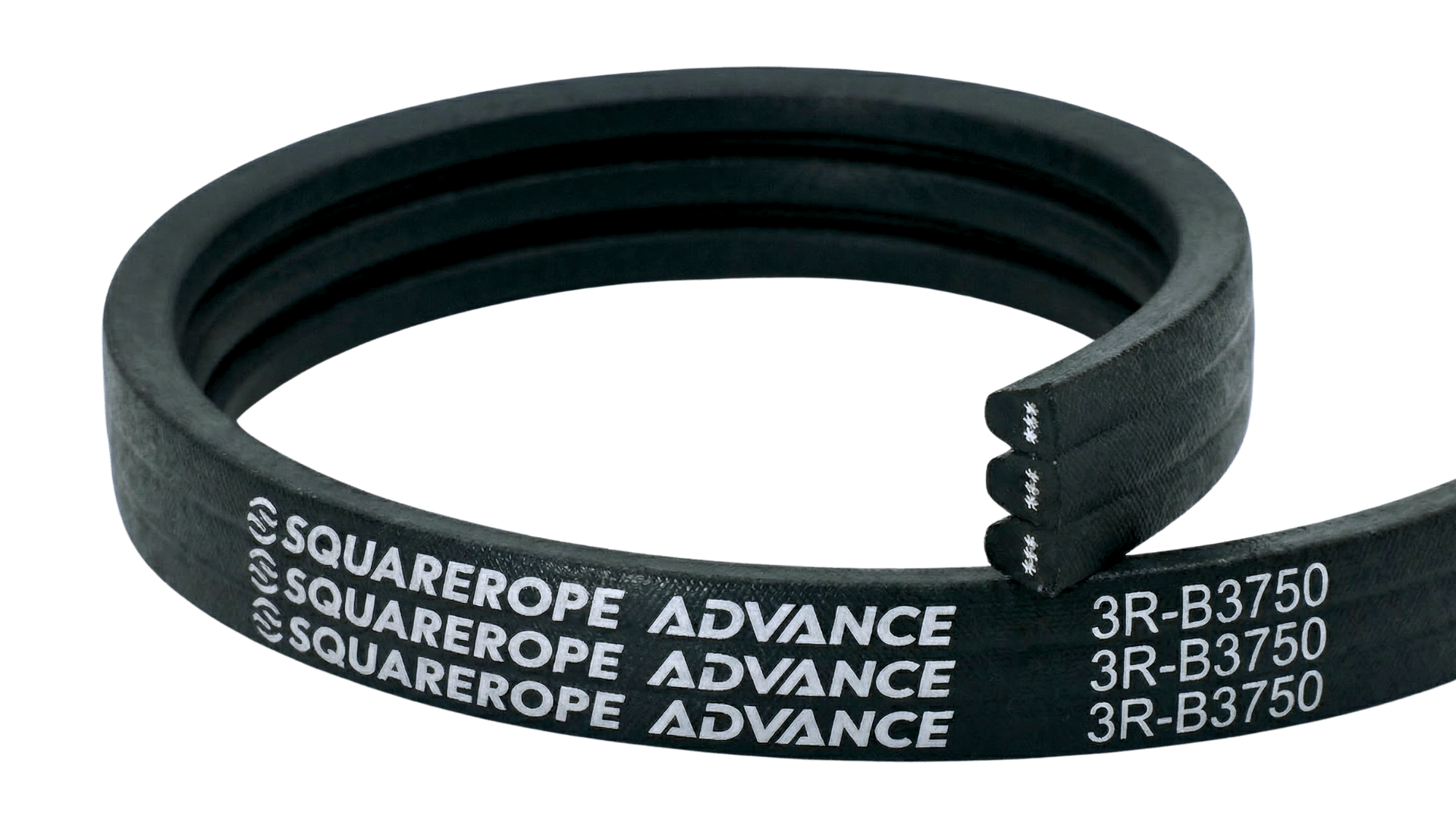
| Profile and construction | Manufacturer, product family, section, wrapped or raw-edge sidewalls, smooth or molded-notch underside, single or joined assembly; width, rib count, or joined-section count where applicable; order quantity recorded separately | Belt, grooves, guarding, minimum diameter and ratings are compatible |
| Length system | Full designation, nominal value, unit and basis such as Li, Ld, Lw, Le, La or the maker-specific equivalent | Exact catalog row and tolerance identified; no generic circumference conversion |
| Duty and geometry | Power or torque, speeds, start, hours, shock, sheaves, ratio, center distance, wrap, idlers and take-up | Current maker calculation supports family, count, length, shaft load and tension |
| Materials and environment | Body, cord and cover specification plus temperature, water, oil, chemical, ozone, weather and flame needs | Exact series datasheet and compatibility statement cover the actual exposure |
| Multiple-belt set | Quantity, maker matching rule and any set or match code | Complete compatible set; no mixed used/new belts or manufacturers |
| Standards and regulated use | Applicable technical acceptance basis and test or inspection evidence; exact-family certificates or declarations where required, with source/issuer, revision, scope and validity | Evidence matches the family, market and intended use; any alternative basis is approved and all mandatory requirements are met |
| Delivery and traceability | Approved source, part revision, packaging, identification, change notification, certificate lot linkage and delivery plan | Supplier can preserve identity and report any change before shipment |
- Evidence to send with the request
- Photograph or transcription of the full marking, OEM part reference, drive drawing and revision
- Release criterion
- Exact approved replacement, or documented engineering approval for a change
- Evidence to send with the request
- Manufacturer, product family, section, wrapped or raw-edge sidewalls, smooth or molded-notch underside, single or joined assembly; width, rib count, or joined-section count where applicable; order quantity recorded separately
- Release criterion
- Belt, grooves, guarding, minimum diameter and ratings are compatible
- Evidence to send with the request
- Full designation, nominal value, unit and basis such as Li, Ld, Lw, Le, La or the maker-specific equivalent
- Release criterion
- Exact catalog row and tolerance identified; no generic circumference conversion
- Evidence to send with the request
- Power or torque, speeds, start, hours, shock, sheaves, ratio, center distance, wrap, idlers and take-up
- Release criterion
- Current maker calculation supports family, count, length, shaft load and tension
- Evidence to send with the request
- Body, cord and cover specification plus temperature, water, oil, chemical, ozone, weather and flame needs
- Release criterion
- Exact series datasheet and compatibility statement cover the actual exposure
- Evidence to send with the request
- Quantity, maker matching rule and any set or match code
- Release criterion
- Complete compatible set; no mixed used/new belts or manufacturers
- Evidence to send with the request
- Applicable technical acceptance basis and test or inspection evidence; exact-family certificates or declarations where required, with source/issuer, revision, scope and validity
- Release criterion
- Evidence matches the family, market and intended use; any alternative basis is approved and all mandatory requirements are met
- Evidence to send with the request
- Approved source, part revision, packaging, identification, change notification, certificate lot linkage and delivery plan
- Release criterion
- Supplier can preserve identity and report any change before shipment
Source: Controlled procurement checklist; ISO 4184:2025 and ISO 1081:2013 provide dimensional and terminology context, not whole-order approval
Verify standards and regulated-use evidence
Use standards within their published scope: ISO 4184:2025 for specified classical and narrow V-belts in the datum system; ISO 1081:2013 for terminology; ISO 1813:2025 for electrical-resistance requirements and tests on new antistatic belts. Conductivity evidence does not approve the whole drive for a hazardous area. ARPM IP-20 concerns classical A, B, C and D belts and sheaves; it is not oil or chemical compatibility evidence. Where no cited standard covers the family or use, define an approved alternative technical acceptance basis while meeting all applicable mandatory requirements.
CE marking applies only when specific EU product legislation requires it; the CE mark on a machine does not automatically create a CE-marking requirement or approval for a replacement belt. ISO 9001 and IATF 16949 are quality-management-system evidence within their certified scope, not proof that a belt has the required dimensions, capacity, compound, conductivity, flame behavior, or legal status. Ask for the product evidence actually required by the market and application. Verify the certificate edition, scope, validity, and applicable transition arrangements with the issuer; do not infer a supplier’s certification from a newer standard edition.
Qualify the supplier and change-control path
Qualify the source by capability, not geography or catalog breadth. The supplier should identify the manufacturer and exact family, provide current controlled datasheets and rating or tension instructions, link certificates to the delivered product, preserve traceability, manage nonconforming product, and name a responsible technical contact. For critical or unfamiliar parts, define sample, first-article, dimensional, or application review before volume release.
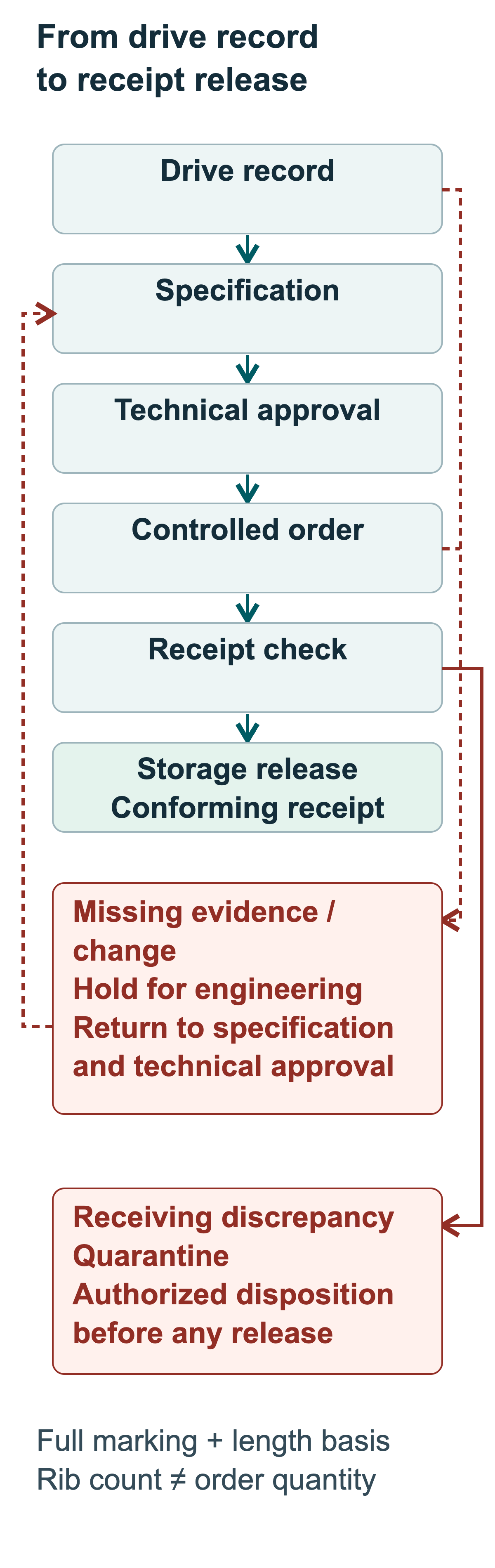
The controlled order must require change notification for manufacturer, plant, source, family, material, construction, dimensions, marking, matching method, certification, tooling, process, operating conditions, or application. The authorized engineer reviews the effect and records disposition before release. Define who may approve substitution, the deviation scope, expiry or revalidation trigger, record retention, corrective action, and stop-ship rules. A seller saying “equivalent” is not approval; a matching lot label is not a matched-set qualification.
Release the purchase in a controlled sequence
Use this release sequence for each belt or matched set:
- Identify the asset, approved drawing or OEM part, installed marking, supplier history, failure consequence, and authorized technical owner.
- Decide whether the request is an exact replacement, an approved alternative, or a redesign; route alternatives and missing data to engineering.
- Complete the duty, geometry, environment, safety and regulated-use inputs before choosing a family or requesting a quotation.
- State manufacturer, exact family, profile, construction, length value and basis, quantity, matching rule, materials, marking, and packaging.
- Attach the current maker selection or rating evidence, correction factors, minimum-sheave and speed checks, shaft-load result, and tension instructions when design approval is required.
- List each certificate, declaration, test report, inspection record and source revision required at quotation, order release, and delivery.
- Evaluate technical compliance separately from price, lead time, minimum quantity, logistics, spare strategy, and total lifecycle risk.
- Approve the supplier and purchase order under document control; record deviations and prevent unapproved substitutions or changes.
Require an auditable purchase record
The purchase order or controlled attachment should identify:
- Asset, machine, drive drawing, OEM or engineering approval reference, revision, buyer and technical approver.
- Manufacturer, exact product family, full marking, profile, construction, materials and product revision.
- Nominal length, unit, length basis, catalog reference, tolerance, quantity and matched-set or set-code requirement.
- Duty and geometry used for selection, including power or torque, speeds, service factor, sheaves, wrap, center distance and corrections.
- Environment and compliance requirements with exact certificate, declaration, test method, issuer, revision, scope and validity.
- Approved manufacturing source, distributor, traceability fields, marking, packaging, preservation and change-notification requirement.
- Required quotation review, sample or first-article approval, receiving inspection, nonconformance route and record-retention period.
- Commercial terms kept separate from technical acceptance: quantity, delivery, lead-time risk, warranty, spare rationale and lifecycle cost.
Inspect receipt, storage, and installation readiness
At receipt, compare the shipment with the controlled order: manufacturer and source, full marking, family, profile, construction, applicable width, rib or joined-section count, length and basis, quantity or complete matched set, set or lot code where required, certificates, packaging, and visible condition. Use an approved sampling and measurement plan for critical dimensions; do not kink, sharply reverse-bend, or damage a belt during inspection. Quarantine any discrepancy, substitution, missing evidence, contamination, deformation, or damage until disposition is authorized. For a length check, specify the approved fixture, measuring force, conditioning, instrument verification, sampling, and acceptance tolerance for that family and length basis. A tape laid around an unloaded belt is not proof of datum or effective length.
Record receipt date and traceability, then store to the exact manufacturer limits and ISO 2230:2026 rubber-product framework, controlling distortion, heat, light, ozone sources, solvents, chemicals, humidity, and minimum bend diameter. Spare quantity is a risk decision based on criticality, lead time, shared usage, documented storage life, failure history and inventory cost—not a universal extra set. Before installation, confirm sheave condition and alignment, exact belt/set identity, manufacturer tension and run-in instructions, safe-work procedure, and guard readiness. Record product age or manufacture date where available and verify the storage-life evidence required by the order or exact-product instructions before release; hold stock if that required evidence is missing.
A defensible belt purchase is a controlled engineering record. It identifies the real drive, the exact product and length system, the evidence that supports performance and compliance, the supplier’s change obligations, and the checks that release the shipment for storage and installation. If one of those links is missing, the order is not yet technically complete.
Key Takeaway
What specifications, materials and quantities should I give when requesting a quote for industrial V-belts?
Specify the asset and approved design, manufacturer and exact family, profile and construction, length value and basis, quantity or matching rule, duty and sheave geometry, materials and environment, required product evidence, supplier traceability, and receiving criteria.
Need a traceable quotation review? See the classical V-belt range and SP power belt range, or contact SQUAREROPE with the full marking, drive data, environment, quantity, and required documents.