Cogged V‑Belt (Non‑Cogged Available)

DYNAFLEX® raw edge cogged belts feature a robust and powerful structure with a proprietary cog design that precisely fits pulley grooves. They exhibit excellent wear resistance against side pressure and strong flexibility. The cog structure securely engages with the pulley, delivering maximum drive power on smaller pulleys. They are ideal for round-the-clock operating systems such as electric motors, automotive fans, and air conditioning equipment.
Engineered for Performance.
Excellent lateral stability
Strong flexibility
More efficient power transmission
Suitable for smaller pulleys
Low heat effect
Oil and heat resistant
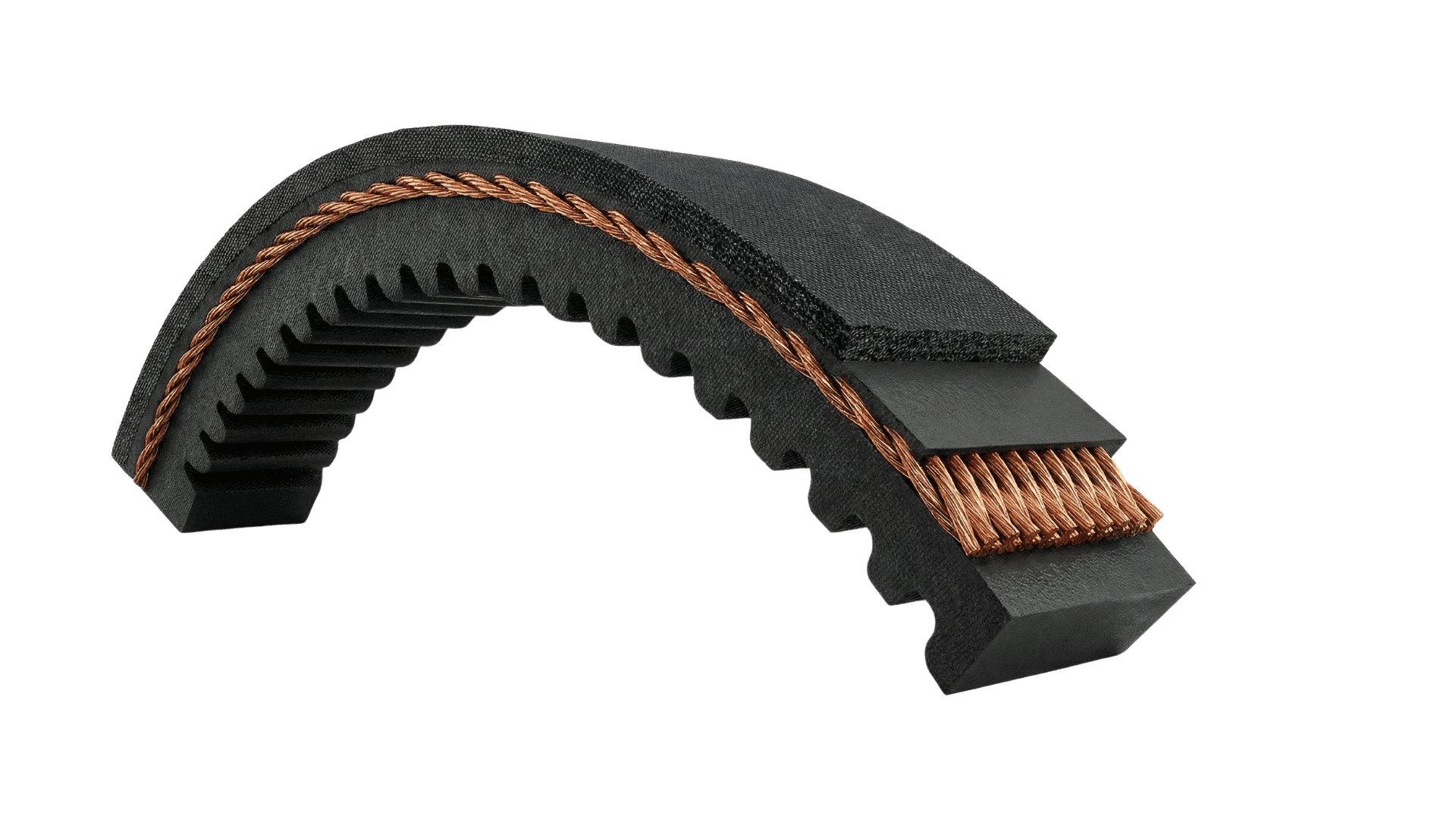
Internal Structure.
Detailed breakdown of the reinforcement layers and materials used. Designed for maximum durability and efficiency in every rotation.
Also written: XPB1750 · XPB 1750 · 5VX900 · 5VX 900
Belt Labeling.
DYNAFLEX® Cogged V-Belt product code includes: 1) Belt type: X represents cogged belt. 2) Belt length: indicated by numbers representing the belt circumference.
Belt Specifications
DYNAFLEX® Cogged V-Belt is manufactured according to international standards DIN 7753 Part-1, DIN 2215, ISO 4184, and American RMA standards.
Cross Section | Belt Top Width bo(mm) | Belt Thickness h(mm) | Length Range Ld(mm) | Min Pulley Dia ddmin(mm) | Quote |
|---|---|---|---|---|---|
| AX | 13 | 8 | 584-2007 | 63 | AX |
| BX | 17 | 11 | 635-2286 | 90 | BX |
| CX | 22 | 14 | 813-2286 | 140 | CX |
| XPZ/3VX | 9.7 | 8 | 487-2540 | 50 | |
| XPA | 12.7 | 10 | 732-2540 | 63 | XPA |
| XPB/5VX | 16.3 | 13 | 1250-2540 | 100 | |
| XPC | 22 | 18 | 1700-2540 | 160 | XPC |
| 8VX | 25 | 23 | 1702-2540 | 225 | 8VX |
Hover over the table to verify dimensions.
Product datasheet
Cogged V-Belt (Non-Cogged Available): specifications and dimensions in one printable PDF.
PDF · English
Frequently Asked Questions
The cogs are not for timing, as on a timing belt; they are there for flexibility. They let the belt bend around smaller pulleys and help it shed heat, so it suits compact drives with small pulleys.
Engineered for Performance.
Excellent lateral stability
Strong flexibility
More efficient power transmission
Suitable for smaller pulleys
Low heat effect
Oil and heat resistant
Internal Structure.
Detailed breakdown of the reinforcement layers and materials used. Designed for maximum durability and efficiency in every rotation.
Also written: XPB1750 · XPB 1750 · 5VX900 · 5VX 900
Belt Labeling.
DYNAFLEX® Cogged V-Belt product code includes: 1) Belt type: X represents cogged belt. 2) Belt length: indicated by numbers representing the belt circumference.
Belt Specifications
DYNAFLEX® Cogged V-Belt is manufactured according to international standards DIN 7753 Part-1, DIN 2215, ISO 4184, and American RMA standards.
Cross Section | Belt Top Width bo(mm) | Belt Thickness h(mm) | Length Range Ld(mm) | Min Pulley Dia ddmin(mm) | Quote |
|---|---|---|---|---|---|
| AX | 13 | 8 | 584-2007 | 63 | AX |
| BX | 17 | 11 | 635-2286 | 90 | BX |
| CX | 22 | 14 | 813-2286 | 140 | CX |
| XPZ/3VX | 9.7 | 8 | 487-2540 | 50 | |
| XPA | 12.7 | 10 | 732-2540 | 63 | XPA |
| XPB/5VX | 16.3 | 13 | 1250-2540 | 100 | |
| XPC | 22 | 18 | 1700-2540 | 160 | XPC |
| 8VX | 25 | 23 | 1702-2540 | 225 | 8VX |
Hover over the table to verify dimensions.
Product datasheet
Cogged V-Belt (Non-Cogged Available): specifications and dimensions in one printable PDF.
PDF · English
Frequently Asked Questions
The cogs are not for timing, as on a timing belt; they are there for flexibility. They let the belt bend around smaller pulleys and help it shed heat, so it suits compact drives with small pulleys.
Need help specifying Cogged V-Belt (Non-Cogged Available)?
Share your operating conditions, dimensions, and quantity. Our team will help confirm the right belt construction.
Technical Insights
Engineering guides and problem-solving articles featuring this product.
Industrial V-Belt Procurement: From Drive Data to Receiving Inspection
Buy industrial V-belts from a traceable drive specification, current product evidence, supplier change control, and documented receiving checks—not appearance or shorthand alone.
V-Belt Compounds: CR, EPDM, NBR, and HNBR
Compare V-belt compounds as an initial screening step, then approve only the exact belt series whose materials, ratings, and environmental limits fit the drive.
Poly-V Belt Selection: Profile, Ribs, Pulleys, and Tension
Specify a Poly-V belt from the exact profile, rib count, length, pulley geometry, route, product-family rating, materials, and tension data.