SP Power Belt
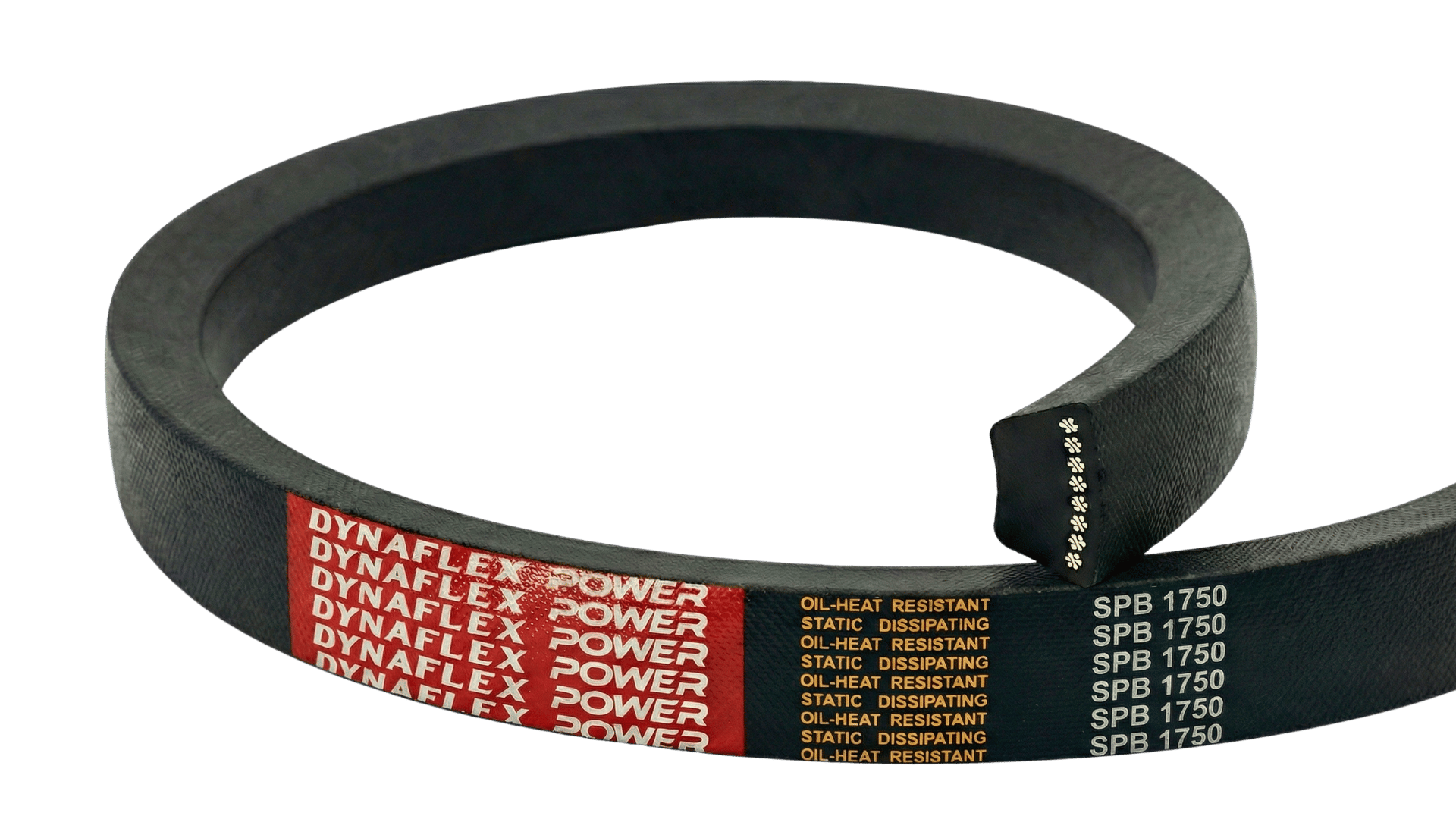
DYNAFLEX® SP Series Power Belt is offered for European DIN 7753 and ISO 4184 metric profile families. Thanks to its narrow V-shaped cross-section design and advanced rubber compound, the SP series power belt can transmit higher power with maximum load capacity and minimum heat effect. Furthermore, due to its streamlined design and increased load capacity, it saves up to half the transmission space compared to traditional V-belts. Suitable for applications with high load fluctuations and harsh working conditions.
Engineered for Performance.
High‑power transmission
Space‑saving design
Oil and heat resistant
Long service life
High efficiency
Anti‑static properties
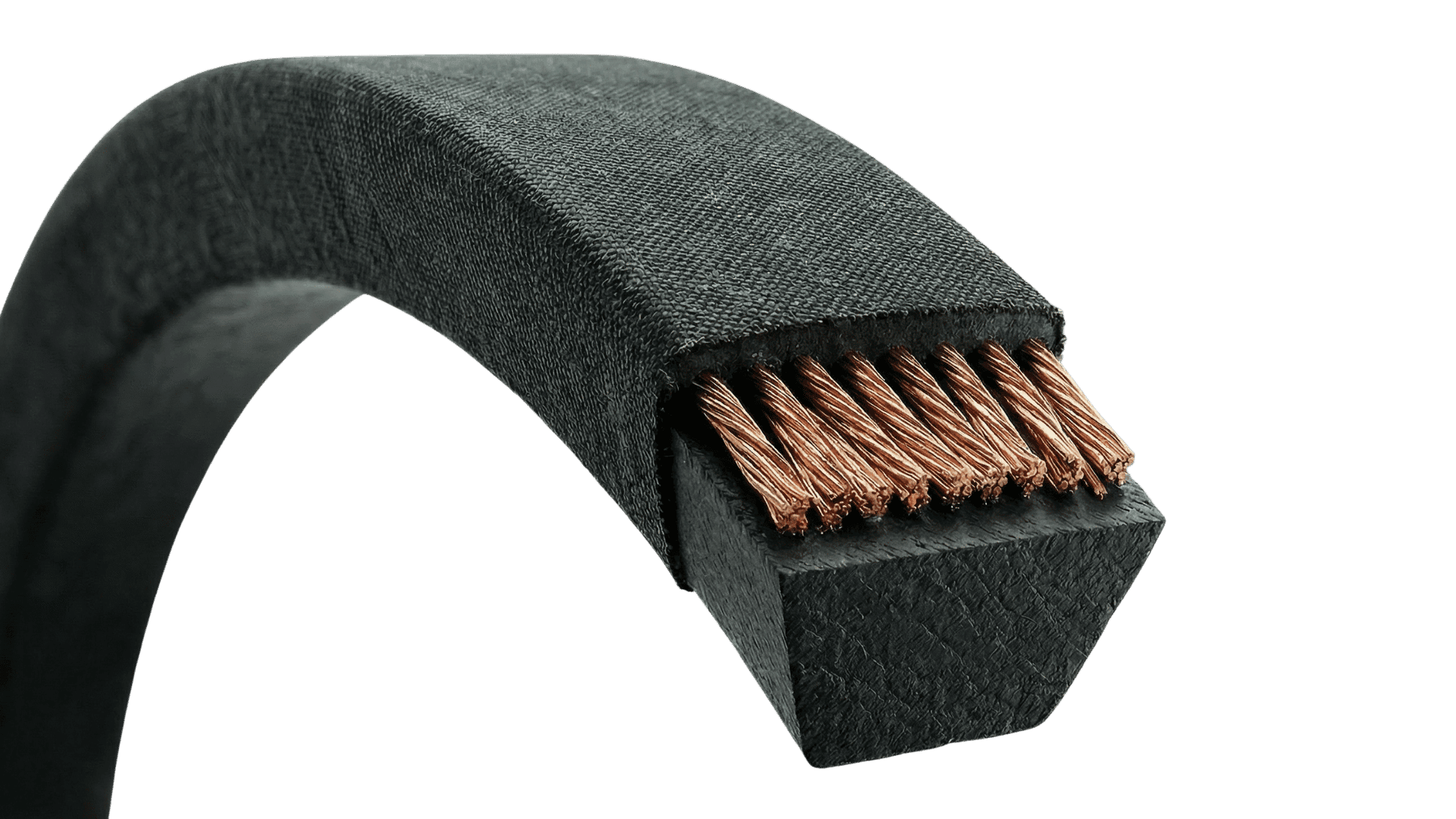
Internal Structure.
Detailed breakdown of the reinforcement layers and materials used. Designed for maximum durability and efficiency in every rotation.
Also written: SPB1750 · SPB 1750
Belt Labeling.
DYNAFLEX® SP Series Wrapped Power Belt product code includes: 1) Belt type: SPZ, SPA, SPB, SPC represent four different cross-sectional shapes and sizes 2) Belt length: indicated by numbers representing the pitch length in millimeters.
Belt Specifications
DYNAFLEX® SP Wrapped Power Belt is manufactured according to international standards DIN 7753 and ISO 4184 metric specifications. According to these standards, the V-belt has a wedge angle of 40°, and the ratio of belt top width (bo) to height (h) is approximately 1.2.
Cross Section | Belt Top Width bo(mm) | Belt Thickness h(mm) | Groove Width bd(mm) | Length Range Ld(mm) | Min Pulley Dia ddmin(mm) | Quote |
|---|---|---|---|---|---|---|
| SPZ | 9.7 | 8 | 8.5 | 630-3550 | 63 | SPZ |
| SPA | 12.7 | 10 | 11 | 732-4572 | 90 | SPA |
| SPB | 16.3 | 13 | 14 | 1250-8000 | 140 | SPB |
| SPC | 22 | 18 | 19 | 1700-12500 | 224 | SPC |
Hover over the table to verify dimensions.
No catalog available for this product.
Frequently Asked Questions
SP belts (SPZ, SPA, SPB and SPC) have a narrower, deeper wedge profile than classic A–E belts: the ratio of top width to belt height is about 1.2, against about 1.6 for classic belts. The tension cords sit slightly higher in the belt and the taller rubber core gives a larger contact area with the pulley, so an SP belt carries more power than a classic belt. That lets you use fewer belts or a more compact drive: our catalogue puts the space saving at about 50% compared with a classic drive. The inch-based narrow sections 3V, 5V and 8V (ratio about 1.1) are sold as our Wrapped Power Belt.
Engineered for Performance.
High‑power transmission
Space‑saving design
Oil and heat resistant
Long service life
High efficiency
Anti‑static properties
Internal Structure.
Detailed breakdown of the reinforcement layers and materials used. Designed for maximum durability and efficiency in every rotation.
Also written: SPB1750 · SPB 1750
Belt Labeling.
DYNAFLEX® SP Series Wrapped Power Belt product code includes: 1) Belt type: SPZ, SPA, SPB, SPC represent four different cross-sectional shapes and sizes 2) Belt length: indicated by numbers representing the pitch length in millimeters.
Belt Specifications
DYNAFLEX® SP Wrapped Power Belt is manufactured according to international standards DIN 7753 and ISO 4184 metric specifications. According to these standards, the V-belt has a wedge angle of 40°, and the ratio of belt top width (bo) to height (h) is approximately 1.2.
Cross Section | Belt Top Width bo(mm) | Belt Thickness h(mm) | Groove Width bd(mm) | Length Range Ld(mm) | Min Pulley Dia ddmin(mm) | Quote |
|---|---|---|---|---|---|---|
| SPZ | 9.7 | 8 | 8.5 | 630-3550 | 63 | SPZ |
| SPA | 12.7 | 10 | 11 | 732-4572 | 90 | SPA |
| SPB | 16.3 | 13 | 14 | 1250-8000 | 140 | SPB |
| SPC | 22 | 18 | 19 | 1700-12500 | 224 | SPC |
Hover over the table to verify dimensions.
No catalog available for this product.
Frequently Asked Questions
SP belts (SPZ, SPA, SPB and SPC) have a narrower, deeper wedge profile than classic A–E belts: the ratio of top width to belt height is about 1.2, against about 1.6 for classic belts. The tension cords sit slightly higher in the belt and the taller rubber core gives a larger contact area with the pulley, so an SP belt carries more power than a classic belt. That lets you use fewer belts or a more compact drive: our catalogue puts the space saving at about 50% compared with a classic drive. The inch-based narrow sections 3V, 5V and 8V (ratio about 1.1) are sold as our Wrapped Power Belt.
Need help specifying SP Power Belt?
Share your operating conditions, dimensions, and quantity. Our team will help confirm the right belt construction.
Technical Insights
Engineering guides and problem-solving articles featuring this product.
Industrial V-Belt Procurement: From Drive Data to Receiving Inspection
Buy industrial V-belts from a traceable drive specification, current product evidence, supplier change control, and documented receiving checks—not appearance or shorthand alone.
How to Install a V-Belt Safely: Alignment, Tension, and Run-In
Plan a safe V-belt installation by controlling energy, inspecting the drive, fitting the exact belt without force, and following the governing instructions.
V-Belt Selection Guide: How to Specify the Correct Drive
Select a V-belt by documenting the load, drive geometry, environment, and duty, then using the exact manufacturer’s rating and installation tables.